Free Face Proportion Guide Grid Generator
Check face proportions on your own reference instantly with our 100% free face proportion guide grid generator. Upload any photo, apply brow, eye, nose and mouth guides with presets for adult, teen, child and baby faces, then export SVG or 600 DPI in seconds. No signup, no downloads needed. Trusted by 60,000+ artists worldwide.
The face, divided where it divides
Horizontal divisions at brow, eye, nose base and mouth, with a vertical centre to check symmetry. Proportional landmarks of a head rather than an arbitrary square ruling.
5 controls, not a fixed picture
Set 3/4 view, choose age preset and gender, toggle head oval and proportion labels. Every one is live on the canvas.
Stacks with figure & portrait
Overlays combine, each carrying its own transform, so this one can sit under or over loomis head and figure.
Sits over your own reference
Export with the photograph or as guides alone on transparency, up to 600 DPI. Printing the guides separately lets you lay them over a print you have already made.
| Ctrl + Z | Undo |
| Ctrl + Y | Redo |
| Esc | Deselect overlay |
| Alt + drag | Free positioning (no snap) |
| Ctrl + scroll | Zoom canvas |
| Ctrl + P | |
| ? | Show this help |
Brow, eye, nose, mouth and ear guides laid over your own reference, with a different set of fractions for an adult, a teen, a child and a baby — because those heads are not the same head scaled down.
The portrait grid maker draws one of the 82 composition overlays in Grid Maker Pro, and the rest stack on the same image.
- 4 age presets
- Eyes at ½ the head
- SVG + 600 DPI export
- Nothing uploaded
What is a face proportion guide?
The portrait grid maker is a free browser tool that lays a face-proportion guide over a reference photograph or a blank canvas. It draws a vertical centre line and horizontal guides at the hairline, brow, eyes, base of the nose, mouth and chin, plus dashed ear bands. Four age presets change those fractions: on an adult head the eyes sit at half the head height and the brow at a third, while on a baby the eyes drop to 0.34 and the brow to 0.20, because an infant skull is mostly cranium. A three-quarter setting shifts the centre line toward the near side and hides the near ear. Nothing is uploaded.

How to check face proportions
A proportion guide over a reference photograph — eye line, nose line, mouth line — set to the age and view you are drawing, so the head is checked before it is rendered.
Load the reference
A face proportion guide needs a face: drop in the photograph you are drawing from, or your own drawing photographed on the easel. The image is drawn to a canvas on your device and never sent anywhere, which matters when the sitter is a commission client.
JPG · PNG · GIF · WEBP
Match the preset to the head
Choose adult, teen, child or baby, set the view to three-quarter if the head is turned, and switch the labels on while you learn the guides. Then drag, scale and rotate the whole guide until the chin line and the centre line sit on the actual head.
Age preset · Gender · 3/4 view
Read the differences, then export
Compare each guide with the feature it names. Where they disagree is where your drawing will look wrong before you can say why. Export SVG or a raster up to 600 DPI to print the guide at working size.
PNG · JPG · PDF · SVG · up to 600 DPI
Three steps, about a minute. No signup, no upload.
What the Portrait Grid Maker does
Named lines, not anonymous cells
A face proportion guide tells you the brow is too high, where a square grid only tells you a shape is in the wrong cell. The guide names the error the brow is too high — which is the thing you can actually correct, because it names the error instead of locating it.
Four heads, not one head scaled
A child is not a small adult. The adult preset puts the eyes at half the head height; the child preset at 0.40 and the baby at 0.34, with the brow moving from a third down to a fifth. Scaling an adult guide onto an infant is how babies end up looking like small grown-ups.
The three-quarter shift, done properly
Turning the head does not just rotate the guides. The centre line moves toward the near side, the oval narrows, and the near ear disappears behind the cheek. The three-quarter setting does all three, which is the part people draw wrong from memory.
Ears in a band, not on a line
The ear is not a point, so the guide draws it as a dashed zone running from the brow to the base of the nose. That band is where an ear belongs on a level head, and it is the single most commonly misplaced feature on a drawn portrait.
On your reference, transformed independently
The guide has its own transform. Drag, scale and rotate it onto a head that is tilted in the photograph without touching the photograph, so you are measuring the pose you actually have.
Printable at working size
Raster export is sized from the paper format and DPI you choose, up to 600, so a printed guide is at the size you will actually draw at. SVG export keeps the lines as vector for a light table or a plotter.
Face proportion guide examples: four ways the guide reads
Face proportion guide vs a plain square grid vs a printed proportion diagram
| Option | Named feature guides | Age-specific fractions | Over your own photo | Cost |
|---|---|---|---|---|
| Grid Maker Prothis tool | Yesbrow, eyes, nose, mouth, ears | Adult, teen, child and baby | Yesprivately on your device | Free |
| A plain square grid | Noanonymous cells | No | Yes | Free |
| A printed proportion diagram | Yes | Usually adult only | Noyou compare by eye | Free or paid |
| Tracing the photo | No | No | Yesbut it teaches nothing | Free |
Who a face proportion guide is for: work where the likeness has to hold
How a face proportion guide works — Where the features sit, why the numbers move with age, and what a guide cannot tell you
Face proportion is the first thing taught in portrait drawing and the first thing abandoned, because the rules get memorised as one set of fractions that then produce the same face forever. Here are the fractions this overlay actually uses, why four sets of them exist, and where the guide stops being useful.
A face proportion guide is one of the 82 composition overlays that measures rather than divides. Every guide is a fraction of the head's height, measured from the top of the skull down to the chin. On the adult preset the hairline falls at 0.08, the brow at a third, the eyes at exactly half, the base of the nose at two-thirds, the mouth at 0.78 and the chin at 1.0. The head's width is 0.72 of its height. Those are the numbers the overlay draws, not a paraphrase of them.
The one worth internalising is the eye line. On an adult head the eyes sit at the halfway point between the crown and the chin, and almost everybody draws them too high, because we attend to the face and forget how much skull sits above it. If you learn nothing else from a proportion guide, learn that the top half of a head is mostly cranium.
Most portrait errors are not errors of drawing. They are errors of where you thought the middle of the head was.
Four presets, because a child is not a small adult
The four sets of fractions differ in a consistent direction. Adult: brow 0.333, eyes 0.50, nose 0.667, mouth 0.78. Teen: 0.30, 0.47, 0.63, 0.76. Child: 0.25, 0.40, 0.55, 0.72. Baby: 0.20, 0.34, 0.50, 0.67. Every feature moves down the head as the sitter gets younger.
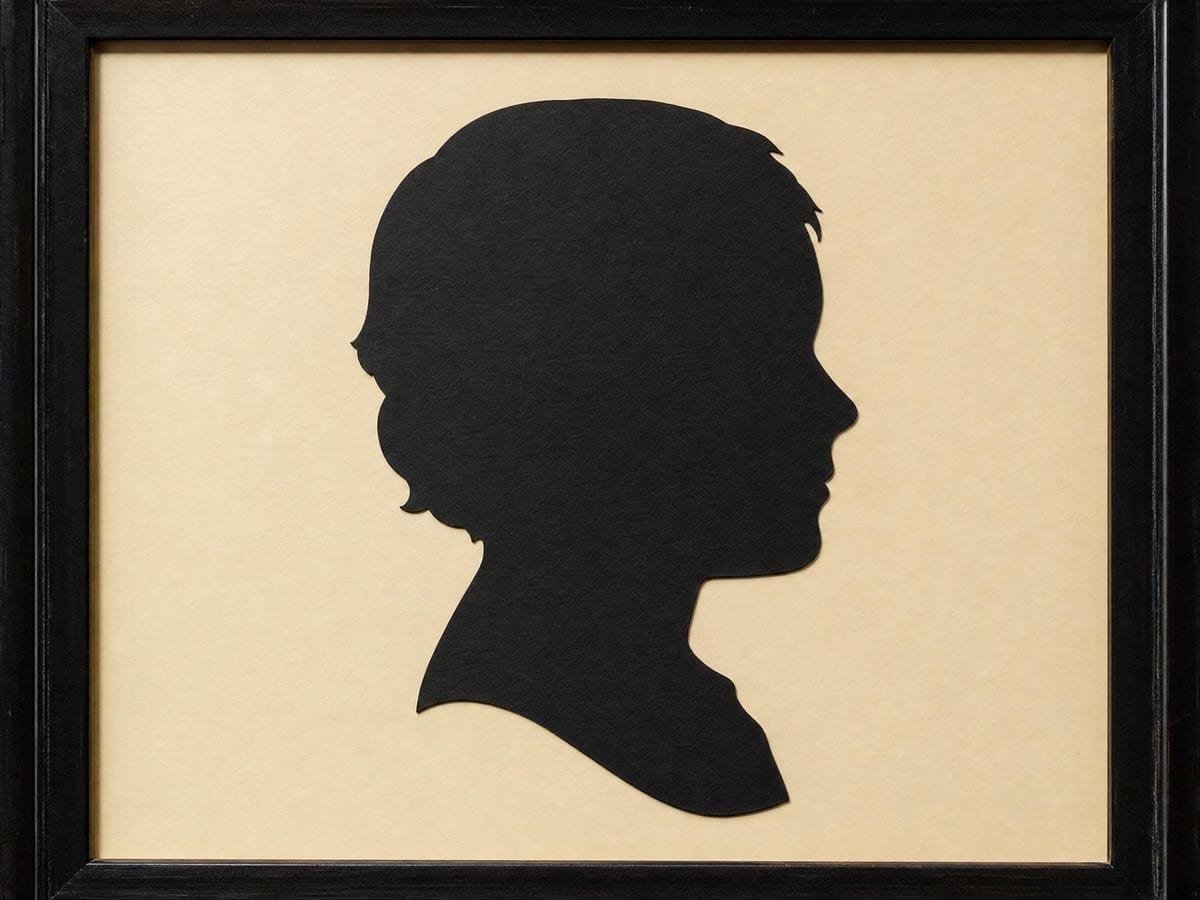
That is not stylistic. The cranium reaches most of its adult size long before the jaw and mid-face do, so on an infant the whole face occupies the lower part of a proportionally enormous skull. The width ratio moves the other way — 0.72 for an adult, 0.82 for a baby — because that skull is also rounder. Draw a baby with adult fractions and you get a small adult, which is the classic tell in amateur family portraits and in a good deal of Renaissance painting.
What the gender setting does, and does not, do
The preset shifts one line. It moves the brow by a hundredth of the head height and nothing else — up for the male setting, down for the female one. That is a deliberately small adjustment, and it is worth being clear that it is the only thing it changes.
Real facial variation is enormously larger than that, and it is individual rather than categorical. The setting is a nudge toward a population average, not a description of a person. Use it if it helps you see the brow; ignore it if it does not. Everything that actually makes a face recognisable lives in the deviations from a guide like this, which is why the guide is for checking, not for generating.
The three-quarter view is three changes, not one
When a head turns, the centre line of the face moves toward the near side — the overlay shifts it by 18% of the head's width — because the far side of the face is foreshortened. The head oval narrows slightly, from 0.43 of the width to 0.40. And the near ear stops being visible, so the overlay draws only the far one.
Drawing a three-quarter view from memory, people get the first change and miss the other two, and on that view the head reads as turned but sits oddly flat. The horizontal guides, meanwhile, do not move at all: brow, eyes, nose and mouth stay at their fractions of the head's height as long as the head is not tilted up or down. Turning changes where things are across the head; tilting changes where they are down it.
Ears, and the band that catches them
The ear guide is drawn as a dashed rectangle rather than a line, running from 0.34 to 0.66 of the head's height. Compare those numbers with the adult brow at 0.333 and the nose at 0.667 and the classical rule falls out of the geometry: the ear spans from the brow line to the base of the nose. It is the most reliable relationship on the whole head and the one most often ignored, because ears get drawn last, small, and wherever there is room.
That relationship also holds when the head tilts, which is what makes it valuable. Tip the head back and the ear appears to rise relative to the eyes — but it stays between the brow and the nose, because all three tilt together. If your drawn ear is not in that band, the head is not tilted the way you think it is.
Using it without drawing the same face every time
Fit the guide to the reference, not the reference to the guide. Drag and scale it until the chin line sits on the actual chin and the centre line runs down the actual centre, then read the difference between each guide and the feature it names. Those differences are the likeness. A sitter with a long mid-face, a high hairline, a small jaw — all of that shows up as a specific, measurable departure from the preset.
Then turn it off and draw. A proportion guide is a check on a construction and a corrective on a finished study; used continuously it produces work that is correctly proportioned and completely generic. The point of knowing where the eyes sit at half height is being able to see, immediately, that on this particular person they do not. The portrait face guide overlay page sets the divisions out, beside the rest of the guides for artists.
Where a face proportion guide gets used
Commission work is where it matters. The client's photo never leaves my laptop, and I can check the brow and the jaw before I have committed any paint.
I teach the eye line first and nobody believes it. Laying the guide over a photograph of their own face is the demonstration that ends the argument in about four seconds.
Character work with children in it is where the presets earn their place. Switching to the child fractions instead of shrinking the adult head is the difference between a kid and a tiny adult.
Face proportion guide: frequently asked questions
The geometry
Where do the eyes sit on a face?
Halfway between the top of the skull and the bottom of the chin, on an adult head. That is what the adult preset draws, and it is the single most useful proportion in portrait drawing because almost everyone places the eyes too high — we attend to the face and forget how much cranium sits above it.
Why are there separate presets for a child and a baby?
Because a child is not a small adult. The cranium reaches most of its adult size before the jaw and mid-face do, so every feature sits lower on a younger head: the eyes move from 0.50 on an adult to 0.40 on a child and 0.34 on a baby, and the brow from a third down to a fifth. The head also gets proportionally wider, from 0.72 of its height to 0.82.
Where do the ears go?
Between the brow line and the base of the nose. The overlay draws the ear as a dashed band from 0.34 to 0.66 of the head height, which brackets the adult brow at 0.333 and nose at 0.667 exactly. The relationship holds when the head tilts, because all three tilt together — so an ear outside that band means the tilt is drawn wrong.
What changes in the three-quarter view?
Three things. The centre line of the face shifts 18% of the head's width toward the near side, the head oval narrows slightly, and the near ear is no longer drawn. The horizontal guides do not move: turning a head changes where features sit across it, while tilting changes where they sit down it.
Is this the same as the Loomis method?
No. The two solve different halves of the problem: the Loomis head generator builds the skull as a solid, and this divides the face on it. For the whole body the figure proportion guide counts heads. Loomis constructs the head as a ball with the sides sliced off, which is what you want when inventing a head from imagination. This guide measures proportions on a head that already exists in front of you, which is what you want when working from a reference.
Can I use it on a photograph of my own drawing?
Yes, and it is one of the better uses. Photograph the work in progress, load it, fit the guide to the drawn head, and the errors show up as gaps between a guide and the feature it names — far more reliably than looking at the drawing in a mirror.
Should I keep the guide on while I draw?
No. Fit it, read the differences between it and your sitter, then turn it off. Used continuously it produces work that is correctly proportioned and generic — the departures from the guide are where the likeness actually lives.
Using it
What does the gender setting change?
The brow line, by one hundredth of the head height — up for male, down for female. That is all it changes, and it is deliberately small. Real facial variation is far larger than that and is individual rather than categorical, so treat it as a nudge toward a population average rather than a description of a person.
How do I fit the guide to a face at an angle?
Use the three-quarter view setting first, then rotate the overlay to match the head's tilt before scaling. Fitting a frontal guide to a turned head by stretching it puts every horizontal in the wrong place — the guides are meant to be moved as a rigid set.
Should I keep the labels on while drawing?
Only until you know the ladder. The proportion labels are how you learn which line is the brow and which the nose base; after a few heads they are six words sitting on a face you are trying to see. The guides read perfectly well unlabelled.
Export and print
Can I print the guide at the size I am drawing?
Yes. Set the paper format you are working to and export a raster at up to 600 DPI, and it will be sized for that sheet. SVG export gives vector lines for a light table or a plotter.
Which format holds up if I enlarge the guide?
SVG. The guides are a set of straight lines and an oval, and an oval is what rasters soften first when scaled — for a head drawn larger than the sheet you exported at, the vector file is the one that stays clean.
Which export goes over a digital painting?
The transparent grid-only PNG — centre line, the horizontal guides, the ear marks and the oval if you have it on, with nothing behind. On its own layer it can be toggled while you paint, which is how most people actually use a proportion guide.
Choosing a grid
Should I use this or the Loomis head?
This for a front or three-quarter face you are measuring; the Loomis head generator for a head you are constructing in any rotation. Loomis builds a three-dimensional ball-and-plane and works at any angle; this is a flatter, faster ladder of features and is easier to fit to a photograph.
Practical matters
Does the reference photo get uploaded?
No. The image is drawn to a canvas in your own browser and never sent anywhere, which matters when the reference is a commission client's photograph. There is no account and no upload step.
Do the presets work for every face?
They are averages, and real faces depart from them — that is the point of laying the guide over a specific photograph rather than drawing from the ladder alone. Use it to find where your subject differs from the average, not to correct them toward it.
Open the tool Portrait grid maker
The proportions, on the head in front of you
Fit the guide, read where your sitter departs from it, then turn it off and draw. No signup, and the reference never leaves your device.
Back to the generator →