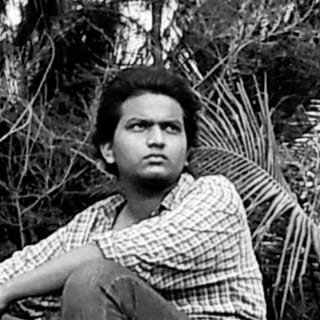
Lock the likeness before the first stroke.
On a commission the likeness is what is paid for, and proportion is where likeness lives or dies. The Grid Maker Pro AR app anchors your reference photo over the actual canvas or paper through the phone camera, so you can trace the eye line, the brow, and the set of the mouth by hand at the right scale — the modern descendant of the squared transfer grid. Then the free overlays in the browser do the construction: the Loomis head builds the skull as solid form at any angle, and the proportion grids verify the face landmarks before the long sittings begin.
Every overlay here is one of the 82 composition overlays every visual artist should know and use.
Construct it free. Trace it in AR.
The browser tool and the AR app each carry half the portrait. The 82 composition and construction grids are free forever in any browser — that is the open front door for building the head and checking proportion. The AR app is the separate paid product that does what a browser cannot: hold the reference photo over the real canvas so you trace the landmarks by hand at scale. Free for the construction; paid for the trace onto the surface.
The Loomis & proportion grids
Build the head with the Loomis head at any angle, verify the landmarks with the portrait face guide, and seat the head in the canvas with the golden ratio. Open the dedicated Loomis head tool →
The AR reference app
Anchor the reference over your canvas in the camera and trace the proportions by hand before the paint commits. Built by Sujith Puthran, a working portrait and figure artist of fifteen years. See the AR app →
Four free overlays that build the likeness.
A traced landmark is a position, not a form. The Loomis head turns those positions into a skull with mass; the proportion grid checks them against the reference; the composition overlays seat the finished head in the frame. Each is a free overlay you rotate and transform to match your reference angle in the browser.
Loomis head
Sphere plus side plane, rotated to your reference angle — the daily-driver construction.
Portrait face guide
Anatomical-landmark grid to verify brow, eye, nose, and mouth against the reference.
Golden ratio
Phi proportion to seat the head and place the focal eye in the canvas as a whole.
Proportional transfer
Square up a small head study to a larger canvas, cell for cell, with the proportion guaranteed.
From reference to canvas in four moves.
Trace the reference onto the canvas in AR, build the head with Loomis construction, verify the proportions, then paint with the likeness already locked. The trace settles position; the construction settles form; the long sittings go to flesh and value.
Anchor the reference
Lock the photo over the canvas in the camera and trace the key landmarks at scale.
Build with Loomis
Drop the Loomis construction at the reference angle so the head reads as solid form.
Check the proportions
Overlay the face guide and confirm the brow, eye, and mouth lines against the reference.
Spend the sittings on paint
With proportion settled, the long hours go to flesh, value, and edges — not re-measuring.
Free to try, fair to keep.
The app runs on Android through Google Play, with iOS planned. The free tier gives you three AR traces of your own photo every month plus all 82 composition overlays, on device, with no account to start. Working portrait painters who trace every commission can lift the limit on a paid plan.
Three AR traces of your own photo each month, plus all 82 composition and construction grids.
Unlimited AR traces for a working portrait practice. Cancel any time; nothing on a server.
Pay once, keep it. Built by a working artist, not a subscription factory.
What portrait painters actually use it for.
On a paid head the proportion has to be right before I commit, so I trace the reference onto the canvas in AR, then build the form with the Loomis sphere. By the second sitting the likeness is locked and I can give the rest of the time to flesh and value.
Tracing places the eye line; Loomis tells me the eye sits inside a skull. I use the AR anchor for position and the construction overlay for form — the two together stop the head from reading flat.
Clients pay for the likeness, not for me re-measuring the brow five times. The face guide overlay verifies the landmarks against the reference once, and after that the painting is just painting.
The questions portrait artists ask.
How does AR tracing help with a commissioned portrait?
On a commission the likeness is the paid-for outcome, so the proportions have to be locked before the painting commits its first decisions. The AR app holds your reference photo over the actual canvas or paper through the phone camera, anchored in place, so you can trace the key landmarks — the eye line, the brow, the set of the mouth — by hand at the right scale. It is the modern version of the centuries-old transfer grid: the proportion carries accurately, and you spend the long sittings on flesh, value, and edges rather than re-measuring the likeness for the fifth time.
Do I still need to learn head construction if I can trace the reference?
Yes — tracing places the landmarks, but construction is what makes the head read as a solid form under any light. The free Loomis-head overlay builds the head as a sphere plus a side plane that you rotate to match the reference angle, so you understand the jaw, the brow ridge, and the cranial mass instead of copying flat shapes. Use the AR trace to lock the reference proportions and the Loomis construction to give them three-dimensional structure. The two reinforce each other; neither replaces the other.
Which free grids should a portrait painter start with?
Start with the Loomis head for construction at any angle, then add the portrait face guide to verify the face landmarks against the reference. For the canvas as a whole, the golden ratio and rule of thirds place the focal eye and seat the head in the frame, and the proportional transfer grid squares up a small study to a larger canvas. All of these are free overlays in the browser, and they pair with the deeper toolkit on the portrait-painters guide.
Is the AR app free, and does the sitter's photo stay private?
The free tier gives you three AR traces of your own photo every month plus all 82 composition overlays, on device, with no account to start. Paid plans — $29.99 a year, $6.99 a month, or $79 once for lifetime — lift the trace limit for working portrait painters. The browser grids are free forever and run entirely on your device, so a sitter's reference photo never leaves the phone, because there is no server to upload it to. That privacy is structural, not a policy promise. Full details are on the AR app page.
Lock the likeness, then paint freely.
Trace the reference onto the canvas in AR, build the head with the free Loomis overlay, and give the sittings to paint. The sitter's photo stays on the device.
References
- Loomis, Andrew. Drawing the Head and Hands. Viking Press (1956). The source of the Loomis head construction.
- Loomis, Andrew. Figure Drawing for All It’s Worth. Viking Press (1943). Proportion of the head and figure.
- Bridgman, George B. Constructive Anatomy (1920). Dover reprint, ISBN 0-486-21104-5. The classic constructive-anatomy reference for the head.
- Hale, Robert Beverly. Drawing Lessons from the Great Masters. Watson-Guptill (1964). ISBN 0-8230-1401-5. On constructive line over anatomy.
- Alberti, Leon Battista. On Painting (Della Pittura, 1435). Penguin Classics (1991). ISBN 978-0-14-043331-3. The velo — the squared transfer grid the AR trace descends from.