
Classic adult front view
The textbook case: thirds land cleanly on hairline, brow, nose, and chin; eyes straddle the brow line in the inner eye-widths.
The face guide marks the academic proportion canon — the three equal thirds from hairline to brow to nose-base to chin, the five-eye-widths across, and the centreline. It is a measuring scaffold for getting a portrait into proportion and for spotting where your subject departs from the average. Those departures are the likeness, so the guide is there to be checked against, not copied. Here is the canon, where it comes from, and where real faces leave it behind.
One of the 82 composition overlays every visual artist should know and use.

On a front-view portrait, the brow line sits at the first third and the eyes straddle it; the five vertical divisions show the eyes occupying the second and fourth eye-widths.
The face guide draws a vertical centreline, three horizontal lines that divide the face into equal thirds, and vertical divisions that split the face into five eye-widths. The three thirds land on the canonical feature heights: the top line at the hairline, the next at the brow, the next at the base of the nose, and the bottom edge at the chin. The five vertical bands place the eyes in the second and fourth slots, with a clear eye-width of gap between them.
Together these are the two halves of the academic canon — vertical proportion (the thirds, which set the eye line and the nose base) and horizontal proportion (the five eyes, which fix the pupil spacing at one eye apart). The overlay is deliberately a scaffold rather than a stencil: you align it to a real face and read off where the brow, eyes, nose, and mouth actually fall relative to the canon. A subject with a high forehead, deep-set eyes, or a long jaw will not match every line, and that mismatch is the information you are after.
The academic canon is simple arithmetic on the front-view face, measured from hairline to chin. Asked how many eyes wide a face is, the answer is about five, and that pupil spacing of one eye apart is the quickest sanity check you can run:
height = hairline→brow = brow→nose = nose→chin | width ≈ 5 × eye
Three working consequences:
The live overlay scales these divisions to any image so you can align them to the reference and read the departures.
Proportional canons of the face are genuinely ancient. Vitruvius, in De architectura (Book III, c. 15 BCE), records the canon that the face divides into three equal parts — forehead, nose, and the lower face — the source Leonardo later illustrated as the Vitruvian Man.1 The systematic anatomical version artists still use was set out by Paul Richer, professor of anatomy at the École des Beaux-Arts, whose Artistic Anatomy (1890) gives measured proportional canons of the head and body.2 In twentieth-century instruction the canon was popularised for illustrators by Andrew Loomis, whose Drawing the Head and Hands (1956) lays out the thirds and the eye-spacing as a teaching scaffold, and by George Bridgman's Constructive Anatomy (1920).34 Robert Beverly Hale's Art Students League lectures, collected in Drawing Lessons from the Great Masters (1964), show the same measurements at work in master drawings.5
The honest caution is that a canon is an average, not a law of beauty, and it has limits. The familiar "thirds" hold well for many adult faces but were codified largely from European classical sculpture; real human variation across age, sex, and ancestry is wide, and contemporary anthropometric studies of facial proportion show substantial spread around any single canon.6 Treating the grid as a beauty template — nudging a subject's features toward the canon — destroys likeness, which is the one thing a portrait must deliver. The grid's real value is diagnostic: it makes the individual's departures from the average measurable, and those departures are exactly what the eye reads as "that person." Use it to see more accurately, not to standardise.
| If you want to... | Use the face guide | Don't use it for... | Difficulty |
|---|---|---|---|
| Check a front-view portrait for proportion errors | Align the thirds and eye-widths and read the mismatches | Strongly rotated or tilted heads (use the Loomis method) | Beginner |
| Place features when blocking in a head | The thirds set brow, nose, and mouth heights fast | Full-figure proportion (use a figure-proportion guide) | Beginner |
| Fix eyes that look too high | The head-midpoint check moves them down to where they belong | Caricature, where you intentionally exaggerate (use it in reverse) | Beginner |
| Draw a child's face accurately | Re-measure against the guide — the canon shifts with age | Assuming the adult canon fits a child (it does not) | Intermediate |
| Capture a specific likeness | Measure how the face departs from the canon — that is the person | Forcing the features onto the lines (kills the likeness) | Intermediate |
Six portrait situations and how the guide's thirds and eye-widths behave.
The textbook case: thirds land cleanly on hairline, brow, nose, and chin; eyes straddle the brow line in the inner eye-widths.
The hairline-to-brow third is taller than the canon. Measuring the excess is what keeps the likeness honest.
Features cluster below the head's midpoint and the eyes sit lower. The adult canon must be re-measured for age.
The horizontal thirds still hold; the five-eye spacing compresses with perspective. Pair with the Loomis construction.
In profile the thirds remain the reliable vertical check; horizontal eye-spacing no longer applies.
With age the lower third often lengthens and the brow lowers. The guide quantifies the shift rather than hiding it.
The most common beginner error: ignoring the cranial mass above the hairline and putting the eyes near the top of the head instead of at its vertical midpoint.
Nudging the subject's brow, nose, or jaw toward the guide's lines standardises the face and erases the very proportions that make it recognisable.
Children have proportionally larger crania and lower features. Applying the adult thirds makes a child read as a small adult.
This is the core use. At the block-in stage portrait painters set the brow, nose, and mouth heights against the thirds, check the eye spacing against the five-eye rule, then measure each individual departure. Atelier and academic instruction teaches the canon precisely so it can be departed from knowingly. Once the proportions are confirmed the guide comes off and observation takes over.
Portrait photographers use the guide to check head tilt and framing and to spot when a lens or pose is distorting facial proportion. Retouchers use it as a reference for symmetry and feature placement — with the same caution painters apply: the goal is a faithful subject, not a face pushed toward an idealised canon.
Game and animation artists use the canon as the baseline they deliberately stylise away from. Knowing where the realistic thirds and eye-line sit lets a designer enlarge the cranium, drop the features, or widen the eyes for a chosen character read while keeping the result coherent rather than accidental.
Drawing teachers use the face guide as a first measurable success for beginners: align the overlay, find the errors, correct them. Because it is a live overlay on the student's own reference, it turns an abstract canon into an immediate, visible check — and it sets up the harder lesson that the canon is a starting point, not the goal.
"The proportions I give you are average proportions only. No two heads are alike, and you must learn to see the differences. The construction is there to help you find them, not to make every head the same."
Andrew Loomis, Drawing the Head and Hands (1956)3
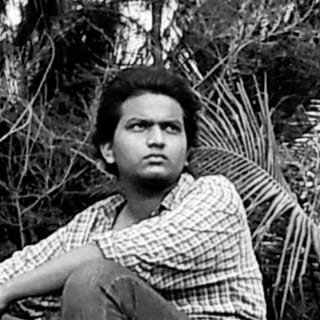
Illustrative composites of how the tool gets used in practice — not quotes from named individuals.
I align the thirds, find the three things that don't match the canon, and those become the portrait. The grid is a way to see, not a stencil.
For character work I learn where the realistic eye-line sits so I can break it on purpose. You can't stylise what you can't measure first.
Free and browser-only is the right shape for this kind of tool. Lower friction means I actually use it, not save it for special occasions.
Drop a reference portrait. The face guide overlay applies in one click. Free, in your browser.
Launch Grid Maker Pro →Everything on this page — the Portrait face guide overlay overlay included — stays free in the browser. The leap from a screen overlay to a drawn line on paper is the one step the web can't bridge. The Grid Maker Pro AR app does it: your photo is held over the paper through the phone camera so you trace it by hand, at sketchbook size or wall size, with all 82 overlays alongside.
How AR tracing works → Free web tool, free forever · AR tracing is the separate paid app