
The Hay Wain (1821)
Constable's iconic landscape: horizon on the lower third, cottage and wain on the right vertical third, sky occupying the upper two thirds. Constable knew of Smith's work.7
The most-used compositional overlay in photography and the most-taught in introductory art classes. Two vertical lines at 33.3% and 66.6%, two horizontal lines at the same proportions, four intersection points. John Thomas Smith named the principle in 1797; modern cameras display it in the viewfinder; working press and event photographers compose to it without thinking. It is also the rule most consistently misapplied — used on symmetric subjects where it makes the composition look accidentally framed, or held to dogmatically when the subject would read better at centre or at φ. This page covers what the rule shows, where it came from, when it beats the alternatives, and the three common failure modes.
One of the 82 composition overlays every visual artist should know and use.

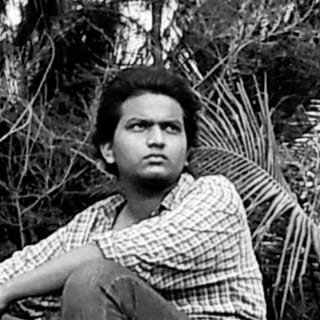
On a three-quarter portrait, the subject's near eye sits naturally on the upper-left intersection — the classical thirds placement that gives the figure room to “look into.”
The rule-of-thirds grid overlay places two vertical lines at 33.3% and 66.6% of the frame width, and two horizontal lines at the same proportions of the height — four gridlines that frame a 3x3 grid. The four intersection points are the recommended landing zones for the primary subject, the focal point placement that gives an off-center subject its sense of balanced composition. The horizontal lines are also the recommended positions for a landscape horizon line — never the middle of the frame. This is the same composition guideline a camera draws as a viewfinder grid; the overlay here just applies it to any reference image you load.
The intersection points sit roughly 5 percentage points further from centre than golden-ratio intersections (which fall at 38.2% and 61.8%). This small difference produces the characteristic thirds feel: subject offset enough to feel deliberate, but not as tight as φ — looser, more "rule applied," less "designed."
The rule of thirds divides the frame into nine equal rectangles by dividing each dimension into three equal parts. The lines fall at exactly:
x = 1/3, 2/3 · y = 1/3, 2/3
The four intersection points lie at coordinates (1/3, 1/3), (2/3, 1/3), (1/3, 2/3), and (2/3, 2/3). On a 1200×675 frame these are at pixel positions (400, 225), (800, 225), (400, 450), and (800, 450). There is no irrational number, no Fibonacci sequence — the rule is the simplest possible division of a rectangle into a 3×3 grid. Try in the live tool.
The earliest known formal statement of the rule of thirds is in John Thomas Smith's Remarks on Rural Scenery, published in London in 1797.1 Smith was a landscape painter and topographical draughtsman. The book is a practical manual on painting British countryside scenes, and the rule of thirds is presented as a guideline for placing the horizon and the dominant compositional masses. Smith explicitly named the principle and recommended it for landscape work.
Smith named the rule but did not invent it. Compositional divisions at one-third intervals appear in painting at least as far back as the Italian Renaissance — Bouleau's The Painter's Secret Geometry documents thirds-based composition in works by Poussin, Lorrain, and other seventeenth-century landscape painters who pre-date Smith's book by 150 years.2 What Smith contributed was the explicit naming and the prescriptive form.
The rule entered photography through the Pictorial photography movement of the 1890s–1910s, which sought to give photographs the visual organisation of paintings. The Kodak company's instruction booklets for amateur cameras, starting in 1900, recommended the rule of thirds to consumers.3 By the 1920s the rule had become the default composition advice in photography manuals worldwide.
The Nikon D70 (2004) was among the first DSLRs to display a thirds grid in the viewfinder by user-selectable option. Within a decade nearly every interchangeable-lens digital camera offered the same overlay.4 Today the rule of thirds is the only composition aid most camera bodies display by default — a convention that influences several billion images a year.
| If you want to... | Use thirds | Don't use it for... | Difficulty |
|---|---|---|---|
| Place a landscape horizon | Upper or lower third — never the middle | Symmetric reflective horizons | Beginner |
| Frame a three-quarter portrait | Near eye on upper-left or upper-right intersection | Tightly cropped centred portraits — use centre-cross | Beginner |
| Fast press or sports framing | Thirds is the fastest mental model — viewfinder grid displays it free | Slow studio work where φ would read better | Beginner |
| Compose multiple-subject scenes | Distribute subjects across two non-adjacent intersections | Symmetric multi-subject scenes (Last Supper, choir lines) | Intermediate |
| Crop documentary photos in post | Thirds intersection placement gives confident off-centre balance | Wide-focal photos with edge distortion | Intermediate |
Six historical works where thirds composition is demonstrable.
Constable's iconic landscape: horizon on the lower third, cottage and wain on the right vertical third, sky occupying the upper two thirds. Constable knew of Smith's work.7
Lange's most-reproduced photograph: mother's face on the right-upper intersection, the foreground children's heads on the lower-left third. Classical thirds in documentary work.8
The workers' bench sits on the lower third; the skyline below it occupies the bottom band. Compositional logic is canonical thirds.
Cathedral spire on left-third vertical; trees framing the corners; meadow occupying lower two-thirds. Constable's deliberate exercise in Smith's principle.
The jumping figure's reflection lands on the upper-right intersection. Cartier-Bresson's "decisive moment" framed entirely by thirds.
Figure's head crosses the upper third; horizon meets the lower third; misted valley occupies the middle band. Painted twenty-one years after Smith's book.
Cathedral facades, reflective lakes, frontal portraits. The symmetry IS the composition — breaking it with an off-centre thirds placement reads as accidental framing.
Subject can be near an intersection without being precisely on it. Beginners sometimes crop aggressively to put a face exactly on the line, losing important context.
For tight portraits and product shots, the subject naturally sits closer to centre than thirds allows. Forcing thirds in these cases produces compositions that read as slightly off, never quite resolved.
Most useful at thumbnail stage. Sketch six to twelve small thumbnails per project; lay thirds on each; keep the ones where major masses land on lines or intersections. Constable, Friedrich, and the Hudson River School painters worked this way deliberately.
In-camera viewfinder overlay is the default. Press and event photographers compose to thirds at speed because the camera shows it for free. Studio and fine-art photographers use it as a planning baseline and deviate intentionally to φ or rabatment when the subject demands it.
Web hero sections, editorial layouts, and poster compositions use thirds as a default. The 1/3–2/3 split for hero-text-over-image is a near-universal convention in 2026 web design.
Standard framing for dialogue is the lookspace shot — actor's eyes on the upper third, looking across the frame toward the empty two-thirds. Inverting the lookspace produces unease deliberately. Codified by Hollywood directors in the 1930s and standard in 2026.5
"Two distinct, equal lights should never appear in the same picture: One should be principal, and the rest subordinate, both in dimensions and degree... To avoid this, let your work be divided into thirds."
John Thomas Smith, Remarks on Rural Scenery (1797)1
Drop a reference image. The thirds grid applies in one click. Free, in your browser.
Launch Grid Maker Pro →You can use the Rule of thirds overlay here for nothing, today and always. What a browser still can't do is get the picture itself onto paper — that needs a camera. The Grid Maker Pro AR app floats your reference over the real page through your phone so you trace the outlines straight onto the surface, then build on them with the same overlays you use here.
Meet the AR tracing app → Free web tool, free forever · AR tracing is the separate paid app