Free Figure Proportion Drawing Grid Generator
Check figure proportion drawing against head counts instantly with our 100% free grid generator. Upload any reference, choose divisions from 6.5 to 9 heads with landmarks at shoulders, pelvis, knees and feet, then export SVG or 600 DPI in seconds. No signup, no downloads needed. Trusted by 60,000+ artists worldwide.
The figure measured in heads
Horizontal divisions at head-height intervals down the whole figure — the canon that puts the pit of the neck, the navel, the pubis and the knee where a standing figure expects them. The head count is adjustable, because eight is a convention and not a law.
1 control, not a fixed picture
Toggle landmark labels. Every one is live on the canvas.
Stacks with figure & portrait
Overlays combine, each carrying its own transform, so this one can sit under or over loomis head and portrait face guide.
A canon you can print
Export the divisions alone on transparency to lay over any figure reference, or with the image, at up to 600 DPI. PDF holds the sheet at true size.
| Ctrl + Z | Undo |
| Ctrl + Y | Redo |
| Esc | Deselect overlay |
| Alt + drag | Free positioning (no snap) |
| Ctrl + scroll | Zoom canvas |
| Ctrl + P | |
| ? | Show this help |
Change the head count and the pelvis mark does not move — which is precisely why a nine-head fashion figure has longer legs than an eight-head one, and where the whole convention comes from.
The figure proportion guide draws one of the 82 composition overlays in Grid Maker Pro, and the rest stack on the same image.
- 6.5–9 heads
- 50% legs at 8 heads
- SVG + 600 DPI export
- Nothing uploaded
What is a figure proportion drawing?
The figure proportion guide is a free browser tool that draws a head-count proportion ladder: horizontal divisions one head apart, a central axis, and dashed landmark marks at the head, shoulders, pelvis, knees and feet. The pelvis is fixed at four heads regardless of the total, so changing the count changes the leg length. It draws over your own reference, exports SVG and raster to 600 DPI, and never uploads anything.

How to use the figure proportion guide
The eight-head canon marked out with the landmarks named, so the shoulder, the hip and the knee land where the proportion says before the figure is drawn.
Choose the head count
A figure proportion guide counts the body in heads: 6.5 for a teenage figure, 7.5 for an average adult, 8 for the classical academic canon, 8.5 for a heroic one and 9 for fashion illustration. The count sets the whole character of the figure before a line is drawn.
JPG · PNG · GIF · WEBP
Find the landmarks
Head, shoulders, pelvis, knees and feet, marked with dashed bars. The pelvis sits at four heads whatever the total, which is what makes a taller count read as longer-legged rather than as uniformly enlarged.
Landmark labels
Draw or check, then export
Use it under a drawing as construction, or over a photograph to see what the subject's actual proportions are. Export SVG or a raster up to 600 DPI sized to your paper.
PNG · JPG · PDF · SVG · up to 600 DPI
Three steps, about a minute. No signup, no upload.
What the Figure Proportion Guide does
One unit, repeated
A figure proportion guide makes the head the unit and counts everything in it. That is the entire system, and its virtue is that it survives being scaled — a figure eight heads tall is eight heads tall at any size on any paper.
The pelvis at four
The pelvis mark is fixed at four heads from the top, whatever the total. At 8 heads that is exactly halfway; at 9 it is 44%, so the legs are 56% of the figure. The mark does not move — the ground does.
Five named landmarks
Head, shoulders, pelvis, knees, feet. Five marks is enough to place a figure and few enough that none of them is guessed — the intermediate positions are yours to judge, which is where the drawing happens.
Numbered divisions
Each head division can be numbered along the side, so you can say "the elbow is at three and a half" rather than counting up from the feet every time you check it.
Over your own reference
Scale the ladder to a photographed figure and read off what that person's proportions actually are. Real people are rarely eight heads, and knowing what your model is measures your drawing against the subject rather than the canon.
Vector out
SVG keeps every division and landmark as an editable line, so the ladder becomes a construction layer under a drawing. Raster export runs to 600 DPI, sized from the paper format.
Figure proportion drawing examples: four ways the proportion guide reads
Figure proportion drawing vs measuring with a pencil at arm's length vs a printed proportion chart
| Option | Head counts | Landmarks marked | Vector export | Cost |
|---|---|---|---|---|
| Grid Maker Prothis tool | 6.5 to 9 | Five, dashed | SVG + raster to 600 DPI | Free |
| Measuring with a pencil at arm's length | Any | By eye | n/a | Free |
| A printed proportion chart | One or two | Yes | No | Per copy |
| A posable 3D figure app | Any | Implicit | Sometimes | Subscription |
Who a figure proportion drawing is for: figures that have to stand up
How a figure proportion drawing works — Head counts: a measuring system, and what it does and does not claim
Figure proportion drawing runs on the head-count canon, the oldest of the 82 composition overlays still in daily use, and almost everything interesting about it follows from one design decision: the landmarks are fixed and the total is not.
The system is simple to state. Take the height of the head from crown to chin as a unit, and measure the whole figure in those units. An adult is conventionally seven and a half to eight of them tall.
Its virtue is scale independence. A proportion expressed in heads is true at any size on any paper, which is what a canon needs to be if it is going to be taught rather than measured out each time.
The five landmarks
The landmarks are where the system earns its place. This guide marks five: the head, the shoulders at one and a half heads, the pelvis at four, the knees at six, and the feet at the bottom.
Notice which of those move when you change the count. The head, shoulders, pelvis and knees are at fixed head-numbers. Only the feet move, because the feet are wherever the figure ends.
That single decision is the whole mechanism of the canon, and it is worth working through. At eight heads, the pelvis at four is exactly halfway down the figure — legs and torso equal. At nine heads, four is 44.4% of the way down, so the legs are 55.6% of the total.
So a nine-head figure is not an eight-head figure scaled up. It is an eight-head figure with an extra head of leg. That is precisely the fashion-illustration convention, and the reason fashion figures read as elongated in the legs specifically rather than uniformly tall.
Child proportions, and the eight-head canon
Run it the other way and the same mechanism explains child proportions. At six and a half heads the pelvis at four is 61.5% of the way down, so the legs are only 38.5% of the figure — which is exactly why children read as short-legged and large-headed, and why drawing a child as a small adult never works.
The eight-head figure is the academic canon and it is a construction rather than a measurement. Real adult populations average closer to seven and a half heads, and the eight-head figure was adopted because it produces a more imposing result, not because it describes anyone.
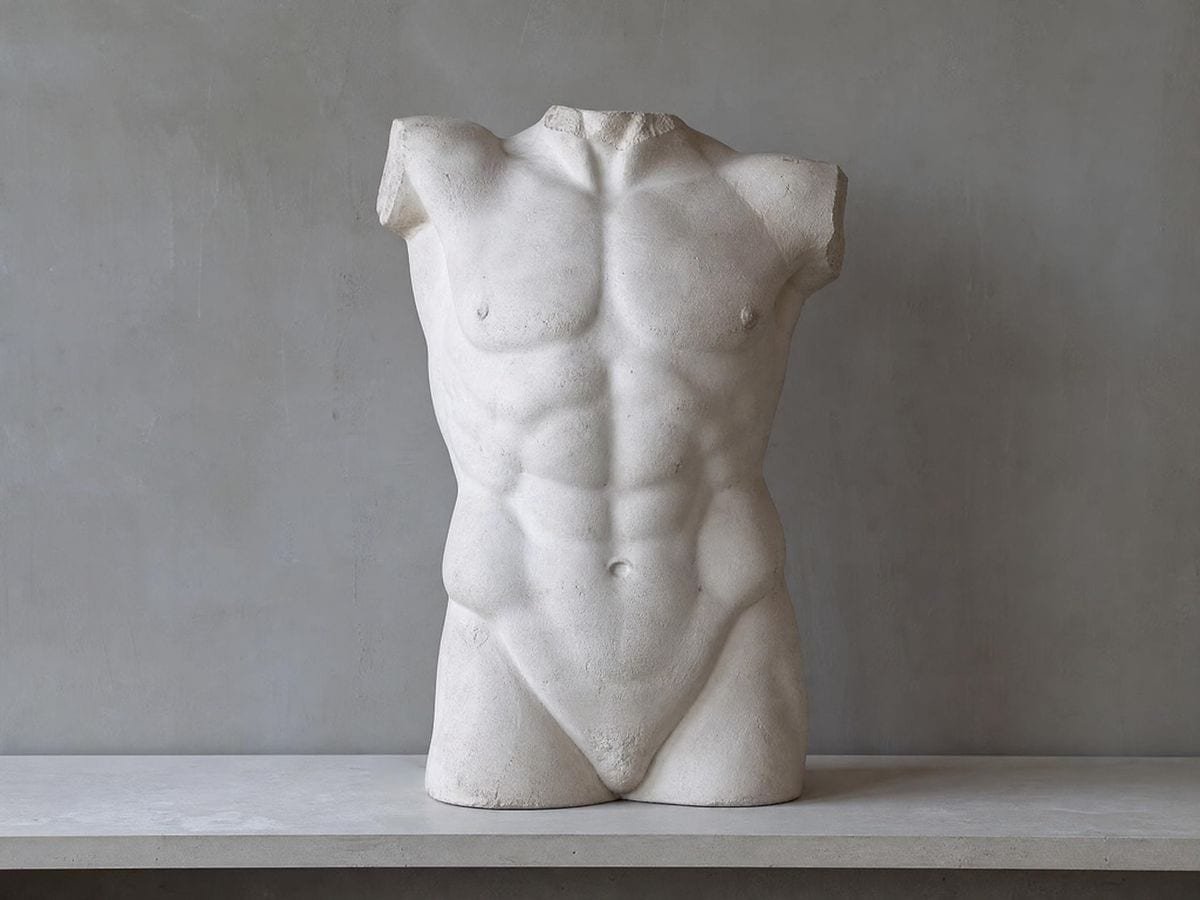
That distinction is worth holding onto. The canon is a convention for making figures look a particular way, not a description of human beings, and the tradition has always been fairly open about it.
Where head counts came from
The history goes back a long way and is unusually well documented, because the canons were written down. The Egyptian system used a grid rather than a head unit: the classic canon put the standing figure at eighteen squares from the sole of the foot to the hairline, revised to twenty-one in the Late Period, and the change is visible in the art.
The figure proportion overlay page follows the canons, beside the rest of the artist guide category. Vitruvius, writing in the first century BC, gives a figure of eight heads and sets out the proportions that Leonardo drew as the Vitruvian Man around 1490 — the figure inscribed in both a circle and a square, which is a claim about the body's relationship to those two forms rather than a drawing aid.
Renaissance treatises multiplied the systems. Alberti's De statua proposes a measuring apparatus rather than a canon. Dürer's Four Books on Human Proportion, published posthumously in 1528, works through five different figure types systematically and is much closer in spirit to a modern reference than to a rule.
Nineteenth-century academies settled on eight heads as the teaching standard, and it has stayed there, with eight and a half used for heroic figures and nine reserved for fashion. Comic and superhero drawing generally uses eight and a half, which is where its characteristic look comes from.
Choosing a count between 6.5 and 9
The guide here covers 6.5 to 9. There is a preset labelled for a child at five heads, but the drawing clamps to a minimum of six — selecting it produces a six-head figure rather than a five-head one. That is a defect in the overlay rather than a design decision, and it is worth knowing before you rely on the child preset for anything.
For genuinely young children — a toddler is closer to four heads and a newborn to three and a half — this guide cannot reach the proportions at all, and a different reference is needed.
The shoulder mark at one and a half heads is the least discussed and one of the most useful. Shoulder placement is where beginner figures most often go wrong, because the head is drawn first at a comfortable size and the shoulders are then placed by feel, usually too close to it.
The knees at six heads on an eight-head figure put them three quarters of the way down, which is another position frequently misjudged. The instinct is to place the knee halfway between pelvis and foot; the canon puts it below that.
Why the guide does not mark width
What the guide deliberately does not mark is width. Head counts govern the vertical only, and the width of the shoulders, the hips and the ribcage are separate conventions — shoulders at about two heads wide for a male figure, less for a female one, is the usual starting point and it is not drawn here.
That omission is honest rather than lazy. Width conventions vary far more between traditions than height ones do, and a guide that asserted a width would be making a claim the vertical canon does not support.
Measuring a photograph with it
The most productive use over a photograph is measurement rather than construction. Scale the ladder to a photographed figure and read where that person's landmarks actually fall. Almost nobody is eight heads, and knowing what your model is measures your drawing against them rather than against a convention.
That is also the fastest way to see why a drawing feels wrong. A figure drawn at eight heads from a seven-and-a-half-head model will read as subtly elongated and nobody will be able to say which part is too long, because the answer is all of it, slightly.
For the head itself the Loomis head generator builds it from a sphere, and the face proportion guide divides the face. For construction under a drawing, the sequence is head size first, then the ladder, then the landmarks, then the figure. Drawing the figure first and fitting a ladder to it afterwards tells you what you did rather than what you meant.
The central axis is a plumb line rather than a spine. A standing figure's weight has to be over its supporting foot, and the axis is where you check that — a figure whose mass sits off the axis will look as though it is falling, which is sometimes the intention and usually not.
The guide draws over your own image rather than exporting a fixed template because the interesting question is always about a specific figure. A ladder on a blank sheet is a diagram; the same ladder on a photograph is a measurement.
The export sizes itself from the paper format and the DPI you choose rather than from your screen. SVG keeps every division editable, which is what you want when the ladder is construction that will be erased.
Everything runs in your browser. Images you load are never uploaded, because there is no server for them to reach. The drawing, the transform and the export all happen on your own machine.
Where a figure proportion drawing gets used
A nine-head figure is an eight-head figure with an extra head of leg. Once students see that, fashion proportion stops being mysterious.
Scale it to the model and read what they actually are. Almost nobody is eight heads, and drawing them as if they were is why the likeness slips.
Shoulders at one and a half heads. It is the mark beginners get wrong most, because the head goes down first and the shoulders follow by feel.
Figure proportion drawing: frequently asked questions
The geometry
Why does changing the head count change the leg length?
Because the pelvis mark is fixed at four heads whatever the total. At eight heads that is exactly halfway, so torso and legs are equal. At nine it is 44.4%, so the legs are 55.6% of the figure. A nine-head figure is an eight-head figure with an extra head of leg.
Is that why fashion figures look the way they do?
Exactly that. The convention is nine heads, and because the pelvis does not move, all of the extra height goes into the legs. It is why fashion figures, at nine heads, read as long-legged specifically rather than uniformly tall.
Why do children read as large-headed?
Same mechanism in reverse. At six and a half heads the pelvis at four is 61.5% of the way down, so the legs are only 38.5% of the figure. Drawing a child as a scaled-down adult fails because the ratio, not the size, is what differs.
Does the child preset work?
Not as labelled. There is a preset for five heads but the drawing clamps to a minimum of six, so selecting it produces a six-head figure. That is a defect in the overlay rather than a design decision. For a toddler at about four heads or a newborn at three and a half, this guide cannot reach the proportions at all.
Is the eight-head figure accurate?
It is a convention rather than a measurement. Adult populations average closer to seven and a half heads; eight was adopted because it produces a more imposing figure. The tradition has generally been open about this.
Where do the landmarks sit?
Head at half a head, shoulders at one and a half, pelvis at four, knees at six, and feet at the bottom. Only the feet move when you change the count — everything else is at a fixed head-number, which is the whole mechanism.
Why is there no width guide?
Because head counts govern the vertical only, and width conventions vary far more between traditions than height ones do. Shoulders at about two heads wide is a common starting point, but asserting it here would be making a claim the vertical canon does not support.
How old is the system?
Very. The Egyptians used a squared grid — eighteen squares from sole to hairline in the classic canon, twenty-one after the Late Period reform. Vitruvius gives eight heads in the first century BC, and Dürer's Four Books on Human Proportion of 1528 works through five figure types systematically.
What is the central axis for?
It is a plumb line, not a spine. A standing figure's weight has to be over its supporting foot, and the axis is where you check that. In a standing pose, a figure whose mass sits off the axis reads as falling — sometimes intended, usually not.
Using it
Do I set the head count from the drawing or before it?
Before, if you are constructing; from the drawing, if you are checking. Set the count you intend — seven and a half for a naturalistic adult, eight for a heroic one — then drag and scale the ladder so the top division sits on the crown, and the rest of the landmarks land where they should.
What are the landmark labels for?
Naming the marks rather than counting down to them. With labels on you can say the shoulders are a division low instead of pointing; with them off the overlay is quieter over a drawing. They are the same marks either way.
Export and print
Can I print the ladder at life size?
Not at life size on a desktop printer, but at A2 and 600 DPI it is large enough to work against for a half-figure, and the export is sized from the paper rather than from your screen. For a wall-sized figure, print the ladder and scale between divisions by hand — they are evenly spaced, which is the easy case.
Which export goes over a drawing in Procreate or Photoshop?
The transparent grid-only PNG. It carries the divisions, the axis and the landmark dashes with nothing behind them, so it drops in as its own layer over work already in progress and can be switched off without touching the drawing.
Choosing a grid
Should I use this or a posable 3D figure?
Different jobs. A 3D figure gives you a pose in perspective and answers questions about foreshortening; this gives you proportion in the picture plane and answers whether the legs are long enough. For a standing or near-standing figure, this is faster and harder to argue with.
Practical matters
Does anything I load get uploaded?
No. There is no server to upload to. The image is read by your browser, the guide is drawn on your machine, and the export is generated locally.
Can I use it in a life-drawing class?
Yes, and nothing about it is metered: every student opens it on their own phone without an account. The usual use is at the end of a pose: photograph the drawing, lay the ladder over it, and see where the proportion drifted.
Open the tool Figure proportion guide
One unit, counted up
A figure proportion guide grows only the legs when the total changes. Export vector or 600 DPI. No signup, nothing uploaded.
Back to the generator →