Free Mandala Generator
Draw mandalas with live symmetry instantly with our 100% free mandala generator. Sketch in one wedge and every sector repeats it, 2 to 36 divisions, mirrored or not, with strokes kept as editable geometry, ready in seconds. No signup, no downloads needed. Trusted by 60,000+ artists worldwide.
Symmetry
A stroke that ends on a sector boundary joins its own reflection and closes into a continuous ring. Snapping is how you land on one exactly.
Pen
Freehand, smoothed
Sheet
None leaves the PNG transparent and the SVG without a backing rectangle.
Place a mark
Rings and spokes are the skeleton most mandalas are built on, and these two place them exactly — with a keyboard, if a pointer is not how you work.
Draw in any one wedge — the other 23 follow. Each is mirrored, so the figure is dihedral (D12).
0 strokes, D12 symmetry, 24 copies of each.
- Strokes
- 0
- Copies of each
- 24
- Symmetry
- D12
- Marks in the figure
- 0
Every stroke is kept as geometry, so changing the sector count redraws what you have already drawn rather than starting again — and the SVG carries that symmetry out as one group and 24 references to it, rather than 24 copies of every path.
Draw one sector, get the other twenty-three
Every stroke is repeated into the sector count you choose, about the centre. Mirroring each sector switches the figure between rotational and dihedral symmetry, which changes the character of the result more than any other control here.
12 controls, not a fixed result
Set sectors, guide rings, colour and weight, choose mark, palette and background, toggle mirror each sector, show construction guides and snap strokes to the guides. 12 controls in all. Every change redraws the sheet, in this page's own document.
Part of the sacred geometry & pattern set
The set also holds sacred geometry grid generator, sri yantra grid generator and metatron's cube grid generator, and 16 more in the group, all of them free and all of them working in the browser.
Sacred geometry grid generatorSri Yantra grid generatorMetatron's Cube grid generator
Strokes stay editable, and export as vector
Lines are kept as point lists rather than baked into pixels, so sector count, colour and weight can all change after the fact. It is also what lets the figure export as SVG — with the symmetry written as one group and one reference per sector, rather than as the same path repeated forty-eight times — beside a PNG at up to 4096 pixels.
- 100% free
- No signup
- No watermark
- Nothing is uploaded
The hard part of drawing a mandala by hand is making the repeats identical. Draw in any one sector here and every other sector copies it exactly, mirrored if you want them to be.
The mandala generator draws one of the 82 composition overlays in Grid Maker Pro, and the rest stack on the same image.
- 2–36 sectors
- Cn or Dn
- Strokes stay editable
- Nothing uploaded
What is a mandala generator?
A mandala generator produces a radially symmetric figure. This one is a drawing tool rather than a pattern picker: you draw a stroke once and it is repeated into two to thirty-six rotations about the centre, optionally reflected within each sector. Strokes are stored as geometry rather than pixels, so changing the sector count or the mirroring redraws everything already drawn instead of starting again, and the finished figure exports as a vector file as readily as a picture.

How to draw a mandala with radial symmetry
An empty circle divided into rings and spokes, then filled — the symmetry is chosen first and stays adjustable, which is what keeps a mandala from drifting without freezing the decision.
Set the sectors before you start, but not finally
Twelve is a good default — enough repeats to read as a mandala, few enough that each wedge has room. It can be changed at any point afterwards and everything already drawn will redraw at the new count, which is the fastest way to find the number a design wants.
JPG · PNG · GIF · WEBP
Draw in one wedge, working outward
The guides divide the circle and mark concentric rings, and strokes snap to both, so a mark lands exactly on a ring or exactly on a sector boundary. Most mandalas are built ring by ring from the centre out, because the centre sets the scale everything else answers to. Freehand is one of five marks: a straight line, an arc concentric with the centre, a full ring and a dot place the geometry a mandala's skeleton is made of. Anything you draw appears simultaneously in every sector.
Circles · Spokes · Center point
Decide mirrored or not, then export
With mirroring on, each sector is a reflection of its neighbour and the figure reads as static and formal. Without it the figure spins. Export hides the guides automatically: a PNG up to 4096 pixels for printing and colouring, or an SVG if the figure is going to be cut, engraved or scaled without limit.
PNG · JPG · PDF · SVG · up to 600 DPI
Three steps, about a minute. No signup, no upload.
What the Mandala Generator does
You draw it, not choose it
A mandala generator draws with you rather than for you. Competing pages hand you finished mandalas to download. The thing people search for after that is how to make one — and the only genuinely hard part of making one by hand is keeping the repeats identical, which is exactly what a computer should take off you.
Cn or Dn, and it matters
Rotational symmetry alone makes a figure that turns; adding a reflection in each sector makes one that sits still. That is the single control that most changes the character of the result, and it is a real distinction in the mathematics of symmetry groups.
Guides that never export
The radii and rings are scaffolding for placing strokes accurately, in the same way a pencil grid is scaffolding for a drawing. They are hidden automatically at export, so the file is the figure and nothing else.
Strokes are geometry, not pixels
Each stroke is kept as its list of points. Change the sector count from eight to twenty and the existing drawing is re-repeated at the new count, rather than being stuck at whatever it was drawn under.
Undo, redo and erase by stroke
Symmetry multiplies mistakes as readily as it multiplies good marks. Undo, redo and the eraser all work on a whole stroke and all of its repeats together, which is the only sensible unit in a tool like this — and the eraser finds a stroke through the copy you clicked, not the one you happened to draw.
Snapping, so the rings actually close
A stroke that ends on a sector boundary joins its own reflection and closes into a continuous ring; one that stops short stays a separate petal. That is the difference between an ornament and a scribble, and hitting the boundary by hand is not possible. Strokes snap to the boundaries and to the guide rings, and every mark is placed relative to the centre, which is what the rotation acts on.
Mandala generator examples: four symmetries, one motif
Mandala generator vs 8–12 vs 16–24
| Option | Character | Wedge width | Suits | Subdivides by |
|---|---|---|---|---|
| 4–6 | Bold, few distinct arms | Wide | Colouring sheets, clear motifs | 2, 3 |
| 8–12 | Balanced, still readable | Moderate | Most mandalas | 2, 3, 4, 6 |
| 16–24 | Dense, ornamental | Narrow | Rings and borders | 2, 4, 8 |
| 7, 11, 13 | Cannot be subdivided | Varies | Deliberately irregular figures | Nothing |
Who a mandala generator is for: people who want to make one, not download one
How a mandala generator works — Radial symmetry, sector counts, and drawing a mandala that holds together
A mandala is a radially symmetric figure, and unlike the 82 composition overlays it is a thing you draw rather than a guide you draw under. Its symmetry does two jobs at once: it is the construction method and it is the reason the finished thing reads as ordered. Understanding which symmetry you are using changes what you can draw with it.
What the word covers
Mandala is Sanskrit for circle, and in Hindu and Buddhist practice it names a symbolic diagram of the cosmos used for meditation and ritual — the Tibetan sand mandala being the most widely known form, constructed over days and deliberately destroyed afterwards.
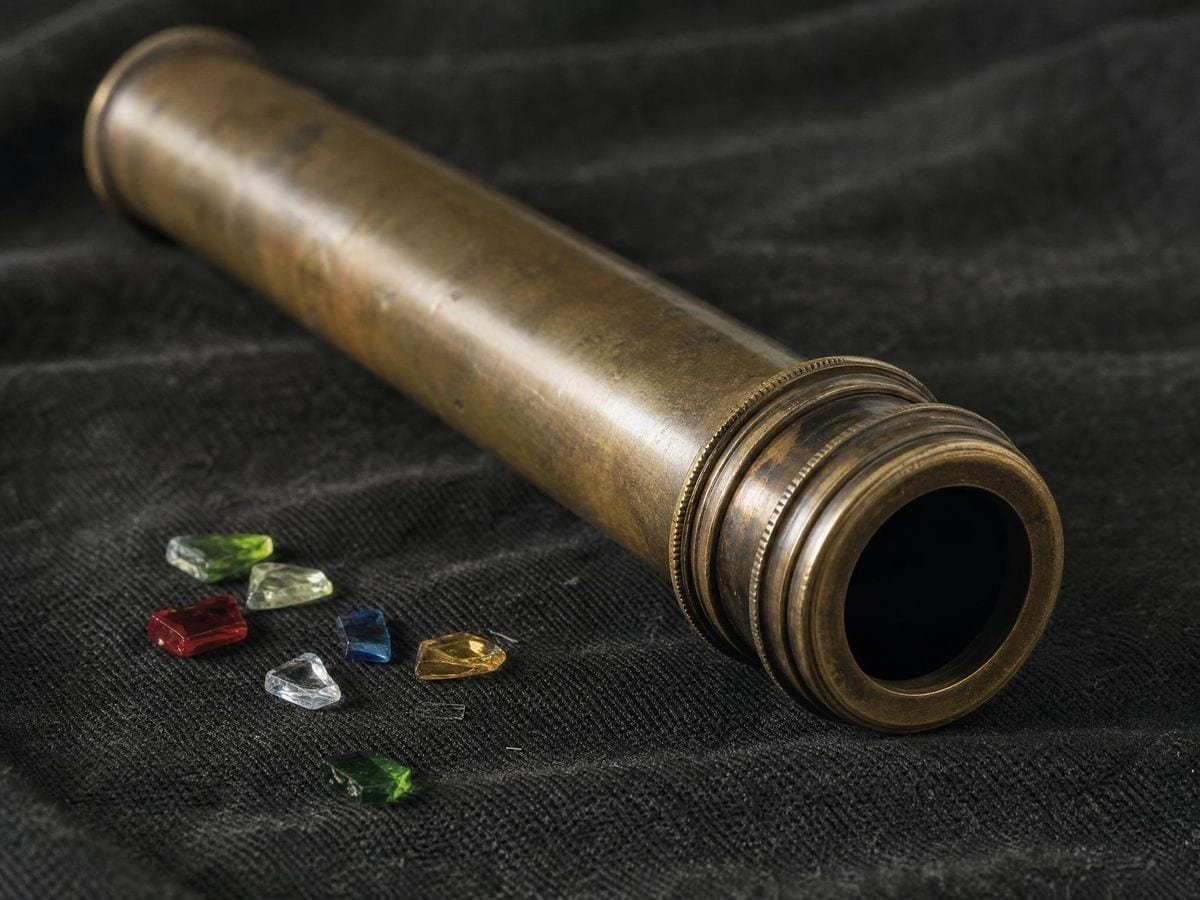
The word is now also used loosely for any radially symmetric decorative figure, which is what this tool makes. That broader use is worth naming honestly: a drawing produced here is a symmetrical figure in the visual tradition, not a ritual object, and the sacred forms have specific constructions and meanings that a free-drawing tool does not encode.
Radial symmetry itself is far wider than any one tradition. Rose windows in Gothic cathedrals, Islamic girih patterns, Celtic knotwork roundels, compass roses, and the whole of ornamental design use it, because a figure that repeats around a centre reads as stable and complete.
Cn and Dn: the two symmetries available here
In the standard notation for symmetry groups in the plane, Cn means n-fold rotational symmetry: the figure maps onto itself when rotated by 360/n degrees, and there are no mirror lines. A pinwheel or a swastika-like whorl is Cn — it has direction, and looks as though it is turning.
Dn is the dihedral group: the same n rotations plus n mirror lines through the centre. A snowflake is D6. A rose window is usually Dn. With mirroring on, the figure has no direction and reads as static and formal.
That is exactly what the mirror control switches between, and it is the most consequential decision in the tool. The same stroke gives a spinning rosette with mirroring off and a symmetrical flower with it on.
Choosing the sector count
Low counts — four, six, eight — leave a large wedge, so each sector carries a lot of drawing and the individual marks stay legible. At a low sector count the figure reads as a small number of distinct arms.
High counts — twenty and above — make each wedge narrow, so a stroke of any length becomes part of a dense ring. Past about thirty-six sectors individual marks stop being readable and the figure reads as texture. This is why very high counts suit fine ornamental rings and are poor for anything with a recognisable motif.
Twelve is the common default for a reason: it divides evenly by two, three, four and six, so sub-patterns at those counts sit inside it comfortably. Eight and sixteen have the same property for powers of two. A prime count like seven or eleven produces a figure that cannot be subdivided, which is sometimes exactly the intention.
Because the count can be changed after drawing, the practical method is to draw a motif at a mid count and then run the number up and down to see where it works. Designs frequently look best at a count nobody would have chosen in advance.
Building from the centre outward
The radial and circular overlay page covers the geometry, beside the rest of the specialty lattice overlays. Traditional mandala construction works ring by ring from the middle, and the reason is practical rather than ceremonial: the innermost ring sets the smallest unit, and everything outside it has to be proportionate to that unit or the figure looks unresolved.
For a guide to draw on rather than a drawing surface, the mandala grid generator lays rings and spokes over your own work, and the Sri Yantra generator draws one specific radial figure exactly. The concentric guides are there for this. Placing the start and end of a stroke on ring boundaries keeps the bands distinct, and distinct bands are most of what makes a complex mandala readable rather than merely busy.
The other reason is that mistakes near the centre are far more visible than mistakes near the rim. At twelve sectors, a stroke drawn near the middle is repeated into a small area where all twelve copies are close together and any inaccuracy shows; near the rim the same error is spread over a much longer circumference.
Why strokes are stored as points
The naive implementation draws each stroke into a pixel buffer as it happens. It is simple and it makes the sector count permanent — the pixels have already been laid down, so changing the symmetry can only affect what comes next.
Keeping each stroke as its list of points means the figure is re-rendered from that geometry whenever the symmetry changes. That is what makes the sector count, the mirroring, and the guides all live controls rather than settings to be decided in advance, and it is why undo can remove a stroke and all its repeats cleanly. Redrawing everything on every pointer event would be the opposite mistake: at twenty-four sectors a forty-stroke drawing is nearly two thousand paths, so the finished part of the figure is held as a rendered layer and only the stroke under the cursor is drawn on top of it.
Practical marks that work
Simple strokes repeat well. A single arc, a straight radial line, a teardrop, a dot — anything with a clear beginning and end — becomes a strong ring. Complicated scribbles repeat into noise, because the eye cannot resolve the individual mark and sees only density. Four of those marks are controls rather than feats of draughtsmanship: the line, the concentric arc, the full ring and the dot are placed exactly, which leaves freehand for the shapes that genuinely want a hand behind them.
Strokes that touch a sector boundary join up with their neighbours, which is how continuous rings and interlaced borders are made. Strokes that stop short of the boundary stay as separate petals. Deciding which of the two you want before drawing is most of the craft, and hitting the boundary exactly is what snapping is for — without it the join is a matter of luck at any sector count above about eight.
Weight is worth varying deliberately. A heavy inner ring with progressively lighter outer ones produces depth; uniform weight throughout tends to flatten the figure into wallpaper. Opacity does the same work more quietly: a band at forty per cent reads as sitting behind the one over it, which is how a dense figure keeps its layers legible.
Where the output goes
The PNG export carries whichever sheet you chose, white by default, with the guides hidden — which suits printing, colouring in by hand, and use as a base for digital colour. Printed at A4 and coloured with pens is the commonest use, and it is why the export is a clean high-contrast drawing rather than a screenshot of the working surface. Three sizes are offered because the same figure is wanted at three scales: 1024 pixels for a screen, 2048 for A4, 4096 for A3. Setting the sheet to none leaves the PNG transparent instead, for a figure going over something else.
For a figure destined for cutting, engraving or a plotter, the right output is the SVG, because those machines follow paths rather than pixels. It is worth knowing what shape that file is in. The symmetry is written as one group and one reference per sector rather than as repeated geometry, so a forty-stroke drawing at D24 is forty paths and forty-eight references instead of 1,920 duplicated ones. That keeps the file the size of the drawing, and it keeps the symmetry as structure a vector editor can still take apart.
Where a mandala generator gets used
Colouring sheets, drawn deliberately in outline at a low sector count so there is space to fill. This is the commonest use and the one that suits printing best.
Ornament and pattern design — rosettes, medallions, tile centres — where the symmetry is being explored quickly before anything is committed to a proper drawing.
Teaching symmetry, where switching mirroring on and off with the same drawing on screen makes the difference between rotational and dihedral groups immediately visible.
Mandala generator: frequently asked questions
The geometry
What is a mandala generator?
A mandala generator produces a radially symmetric figure. This one is a drawing tool: you draw a stroke once and it is repeated into a chosen number of rotations about the centre, so the repeats are exact rather than approximate.
Can I change the sector count after I have started drawing?
Yes, and it is the best way to work. Strokes are kept as geometry rather than pixels, so raising or lowering the count re-repeats everything already drawn. Designs often look best at a count you would not have chosen in advance.
Why does my drawing look like noise?
Too many sectors for the marks being drawn. Complicated strokes repeated twenty-four times become density rather than pattern. Simplify the stroke, or lower the count until individual marks are readable again.
Does it work on a touchscreen?
Yes, and drawing with a finger or a stylus is more natural here than a mouse. The canvas takes pointer input, so tablets and phones behave the same as a desktop.
Is a figure made here a real mandala?
It is a radially symmetric figure in the decorative tradition. Mandala in Hindu and Buddhist practice names a symbolic diagram with specific constructions and meanings, which a free-drawing tool does not encode. The word is used here in its broader visual sense.
Using it
What does the mirror control actually change?
It switches between rotational symmetry alone and rotational symmetry with reflections. In symmetry-group terms that is the difference between C-n and D-n. Practically, a figure without mirroring appears to turn, and one with mirroring sits still.
How many sectors should I use?
Twelve is a strong default because it divides by two, three, four and six, so sub-patterns fit inside it. Use four to six for colouring sheets where each mark needs space, and twenty or more for dense ornamental rings where individual marks are not meant to read.
How do I make continuous rings rather than separate petals?
Draw strokes that touch the sector boundary. A stroke reaching the edge of its wedge joins its neighbours and closes into a ring; one stopping short stays as a separate petal.
Can I change the sector count after I have started?
Yes, and it re-mirrors everything already drawn into the new count. That is either the best feature here or a disaster, depending on whether you meant it. Try a stroke at four sectors before committing an hour at twenty-four.
How do I draw continuous rings rather than separate petals?
Draw a stroke that crosses the whole sector, edge to edge. A stroke that stops inside its sector repeats as a detached petal; one that meets both sector boundaries joins up with its own repetitions into a ring.
How do I draw a perfect circle or a straight spoke?
Switch the mark from Draw to Ring, Line, Arc or Dot. Freehand is the right tool for a petal and the wrong one for a ring, and a mandala's skeleton is rings and spokes — the geometric marks place them exactly, and snapping puts their ends on the guides.
Can I use this without a mouse?
Yes. The Place a mark controls set a radius with a slider and add a ring or a set of spokes with a button, so the skeleton of a mandala can be built entirely from the keyboard. Freehand marks still need a pointer, which no arrangement of controls can replace.
Export and print
Do the guides appear in the exported file?
No. The radii and rings are hidden automatically at export, so the PNG contains the figure and nothing else.
Can I export a vector file?
Yes — SVG, beside the PNG. The strokes are held as geometry all the way through, so the vector file is the drawing itself rather than a trace of a bitmap. It writes the symmetry as one group and one reference per sector, so it stays the size of the drawing and a vector editor can still take the repeat apart.
Do the construction guides appear in the export?
No — the circles, spokes and centre point are on screen to draw against and are not part of the artwork. What exports is what you drew, which is why it is safe to leave a dense guide up while working.
Can I get a mandala with a transparent background?
Set the background to None. The PNG then carries an alpha channel and the SVG has no backing rectangle, so the figure sits over whatever it is placed on. The plate shows a checkerboard while that is selected, which is what the transparency will be.
Choosing a grid
Is this the same as the mandala grid?
No, and the difference is which one draws. The mandala grid is an overlay — rings and spokes you draw on top of by hand. This one repeats your stroke into every sector as you make it, so the symmetry is produced rather than guided.
Should I use a pattern generator instead?
If you want a figure without drawing one, yes — there are plenty that assemble mandalas from motif libraries. The trade is that the result is theirs and this one is yours: every stroke here is a mark you made, repeated.
Practical matters
Is it free, and do I need an account?
It is free and there is no account. Nothing is watermarked or metered.
Is anything uploaded?
No. The drawing happens on a canvas in this page and the export is assembled in the browser. There is no server.
Can I sell prints of what I draw here?
Yes. The strokes are yours, the symmetry is arithmetic, nothing exported is watermarked and the terms leave the drawing with you. Export SVG if the print will be large — repeated strokes show faceting sooner than single ones.
Will my drawing still be here if I close the tab?
It is kept in this browser and offered back the next time you open the page, with a choice between bringing it back and starting fresh. It never leaves the device — there is no account and no server — so it is not on your other machines, and clearing site data clears it.
Open the tool Mandala generator
One wedge, and thirty-five more
A mandala generator takes one number. Set the sectors, draw, change the count and watch it redraw. Free, no signup, nothing uploaded.
Back to the generator →