Free Ain Soph Grid Generator
Draw the Ain Soph diagram instantly with our 100% free kabbalah grid generator. Set up to twenty concentric circles spaced evenly by construction, add the three pillars and named sephirot, then export clean SVG in seconds. No signup, no downloads needed. Trusted by 60,000+ artists worldwide.
Concentric circles without limit
Rings expanding from a common centre, the Kabbalistic figure of the boundless. Spacing is regular, so the diagram reads as endless continuation rather than as a finite set of rings.
5 controls, not a fixed picture
Set size, circles and construction step, toggle three pillars and sephirot names (10 circles). Every one is live on the canvas.
Stacks with sacred geometry & pattern
Overlays combine, each carrying its own transform, so this one can sit under or over flower of life, sri yantra and metatron’s cube, and 15 more in the same set.
Concentricity held exactly
Nested circles show any centring error immediately; the figure is computed from one centre, so it does not have one. SVG for paths, raster to 600 DPI.
| Ctrl + Z | Undo |
| Ctrl + Y | Redo |
| Esc | Deselect overlay |
| Alt + drag | Free positioning (no snap) |
| Ctrl + scroll | Zoom canvas |
| Ctrl + P | |
| ? | Show this help |
One to twenty rings at exactly equal radial intervals, with the three pillars and the ten sephirot names available — the circles presentation of the Kabbalistic diagram rather than the familiar upright tree.
The Ain Soph generator draws one of the 82 composition overlays in Grid Maker Pro, and the rest stack on the same image.
- 1–20 circles
- Pillars at ±r/3
- SVG + 600 DPI export
- Nothing uploaded
What is the Ain Soph?
The Ain Soph generator is a free browser tool that draws evenly spaced concentric circles — any number from one to twenty — with the ith circle at exactly R × i/n. Three optional vertical pillars run the full height at the centre and at a third of the radius either side. Set the count to ten and the circles can be labelled with the names of the sephirot, from Keter at the innermost to Malkuth at the outermost. Everything is drawn on your own canvas and nothing is uploaded.

How to draw the Ain Soph circles
Concentric circles at whatever count you set, opening outward from a single point. The simplest figure in the set, and the one the others are usually placed inside.
Set the count
Ain Soph draws anything from one to twenty concentric circles. The spacing is always even — the ith circle sits at R times i over n — so changing the count re-spaces the whole set rather than adding rings to the outside.
JPG · PNG · GIF · WEBP
Add the pillars or the names
The three pillars are a separate toggle. The sephirot names appear only at a count of ten, because they name ten specific emanations and labelling any other number would be inventing correspondences.
Size · Circles · Three pillars
Place it, then export
Drag, scale and rotate the figure over your artwork or work on a blank canvas at your paper size. Export SVG for a plotter or a document, or a raster at up to 600 DPI.
PNG · JPG · PDF · SVG · up to 600 DPI
Three steps, about a minute. No signup, no upload.
What the Ain Soph Generator does
Radii at exact fractions
Ain Soph places its ith circle at R times i over n, with no accumulated error and no eyeballed gaps. Concentric circles are the figure where uneven spacing is most visible, because the eye compares adjacent gaps directly.
Three pillars, placed not drawn
Centre, and a third of the radius either side, running the full height of the figure. Placed by construction the pillars are symmetrical; placed by eye the outer two come out unequal, and on a figure this regular that reads as a tilted diagram.
Names only at ten
The sephirot labels appear at a count of ten and nowhere else. There are ten of them; labelling seven or twelve circles would be inventing correspondences, so the tool declines rather than guessing.
Any count, one to twenty
Useful well beyond its name. Evenly spaced concentric circles are a target, a radial scale, a contour set and a ripple diagram, and the count is the only thing that changes between them.
Over your own work
Its own transform, so the rings can be centred on something in a photograph or scaled into a layout without moving what is underneath.
Vector out
SVG export keeps every ring a true circle rather than resampling it. Raster export is sized from the paper format and DPI you choose, up to 600.
Ain Soph examples: four ways the figure reads
Ain Soph vs duplicating a circle in an editor vs a downloaded diagram
| Option | Radii at exact fractions | Count adjustable | Vector export | Cost |
|---|---|---|---|---|
| Grid Maker Prothis tool | YesR × i/n | Yesone to twenty | SVG + raster to 600 DPI | Free |
| Duplicating a circle in an editor | Only with careful maths | Yesby repetition | Yes | Subscription |
| A downloaded diagram | Fixed by the file | No | Sometimes | Free or paid |
| Compass and ruler | Yesif each radius is measured | Yes | No | Time |
Who the Ain Soph is for: anything measured outward from a centre
How the Ain Soph works — Two Kabbalistic diagrams, and the one this overlay draws
Two of the 82 composition overlays arrange the sephirot, and the familiar one is not this. Being clear about which is which explains what this overlay draws, why the pillars and the circles sit oddly together, and what the figure is genuinely useful for beyond its name.
The overlay draws concentric circles: any number from one to twenty, each at an exact fraction of the outer radius. Optionally it adds three vertical lines — one down the centre, one a third of the radius to the left, one a third to the right — and, at a count of ten, the names of the sephirot from Keter innermost to Malkuth outermost.
In Lurianic Kabbalah the emanations are described in two complementary arrangements: iggulim, circles, in which each level encloses the next as concentric spheres; and yosher, upright, in which they are arranged as the branching figure everyone knows as the Tree of Life.
Circles and tree are two accounts of the same structure. Most drawings show one; this one shows the first.
Which makes the three pillars a hybrid
The three pillars — Severity, Mercy and Equilibrium in the usual naming — belong to the tree. They are the three vertical columns the ten sephirot are distributed across in the upright arrangement, and they carry meaning because particular sephirot sit on particular pillars.
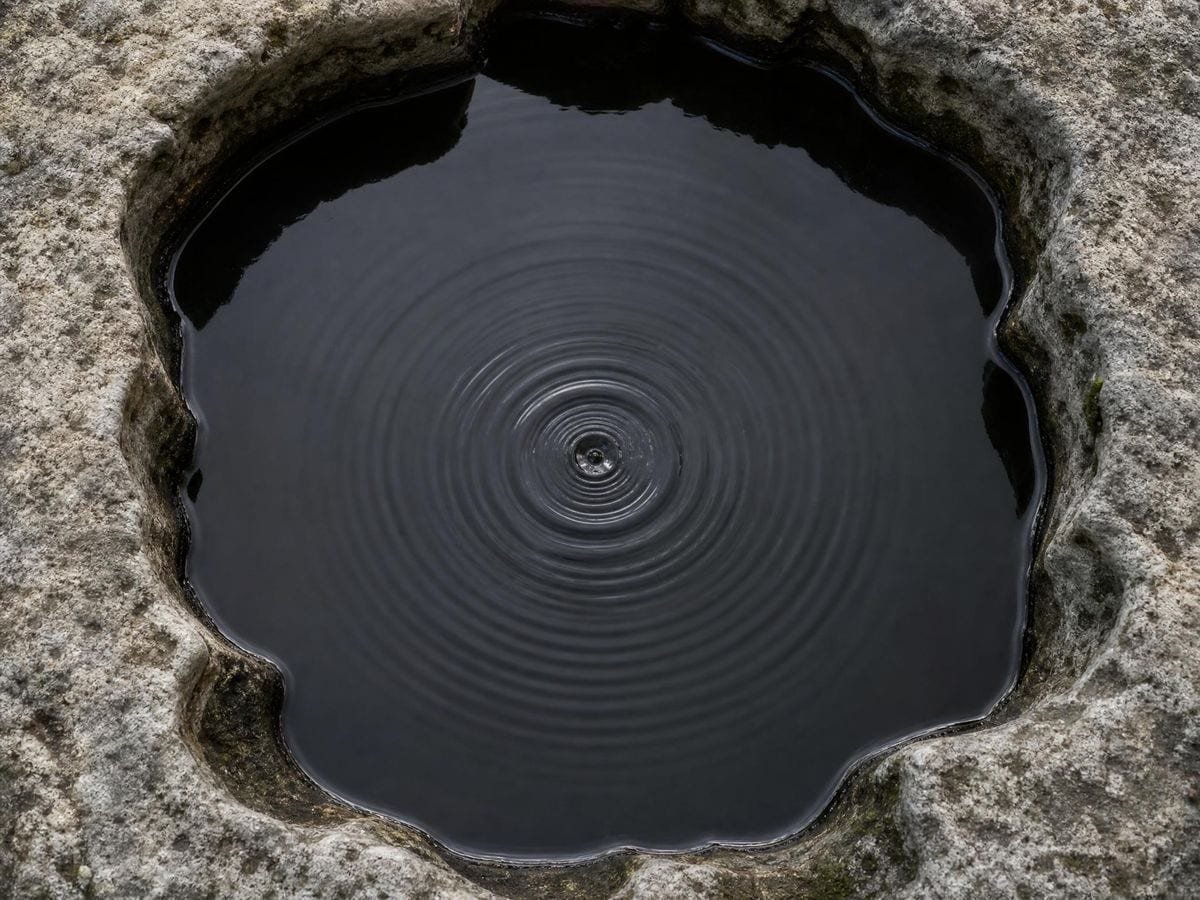
In a concentric-circle diagram there are no columns to distribute across: every sephirah is a whole ring, and the pillars pass through all of them equally. So the pillars in this overlay are best read as a compositional device — three vertical guides at the centre and a third of the radius either side — rather than as the pillars of the tree carrying their usual meaning.
That is worth saying plainly because the combination is not a traditional single diagram, and a page that presented it as one would be inventing a source. The circles are traditional; the pillars are traditional; the two together, as drawn here, are a useful construction rather than a documented figure.
What Ain Soph actually names
Ein Sof, transliterated Ain Soph, means “without end”: the infinite, the divine as it is prior to and beyond any emanation. It is specifically not one of the ten sephirot. It is what the sephirot are held to proceed from, and in most accounts it is by definition beyond depiction.
So a diagram titled Ain Soph is naming the unbounded field the circles sit in rather than any of the circles themselves. In the circles arrangement that reading is quite natural — the outermost ring is a boundary drawn on something that has none — and it is one reason the concentric presentation was used at all.
The ten names the overlay can apply are the sephirot proper: Keter, Chokmah, Binah, Chesed, Geburah, Tiferet, Netzach, Hod, Malkuth and Yesod. Different traditions order and spell them differently, and some substitute Da'at; the set here follows the most common arrangement, and if yours differs, turn the labels off and set your own type over the exported rings.
Everything else it is good for
Strip the names and this is simply a set of evenly spaced concentric circles at an exact count, which is a surprisingly hard thing to get by hand and a surprisingly common thing to need. It is a target, a radar scale, a ripple diagram, a set of contour rings, a tree-ring study, the range bands on a map.
The even spacing is the part that matters. Concentric circles are the figure where irregular gaps are most obvious, because the eye compares each gap directly against its neighbour with nothing in between to distract it — the same reason a badly spaced ruler looks wrong immediately. Placing the ith ring at exactly R times i over n removes the question.
For radial scales, note that even spacing in radius means uneven spacing in area: the outermost annulus of a twenty-ring set contains nearly ten percent of the total area while the innermost contains a quarter of one percent. If your rings are meant to represent equal quantities rather than equal distances, evenly spaced radii are the wrong construction, and it is worth catching that before the diagram is published rather than after.
Making things from it
For plotting and cutting, export SVG — twenty true circles scale to any size and a raster version thickens the inner rings first, where the line spacing is tightest relative to the stroke. For documents, the same export drops in as vector and can be recoloured per ring.
The upright arrangement belongs to the tree of life generator, and for evenly spaced rings with no doctrine attached the polar grid generator adds spokes and a scale. If you are setting the sephirot names yourself, export with the labels off and place type over the rings in your own tool. The overlay's labels are positioned to the right of each ring, which is legible on screen and rarely what a finished piece wants; leading each name out to a common margin usually reads better on paper.
Choosing the count
The count control does more than add rings — it re-spaces the whole set, because the ith circle always sits at exactly R times i over n. Going from ten rings to twelve does not add two outside the existing ten; it redraws all twelve at new radii. That is the right behaviour for a proportional diagram and a surprise if you expected rings to accumulate.
For readability, the practical ceiling is lower than the twenty the control allows. Beyond about twelve rings on a screen-sized figure the inner gaps close to within a line width of each other and the centre reads as a solid disc. If you need more divisions than that, either increase the figure's size or drop the line weight before adding rings — and check it at the size it will actually be seen. The Ain Soph overlay page sets out both arrangements, beside the rest of the sacred-geometry overlays.
Where the Ain Soph gets used
Radial scales for maps. Even spacing by construction, and I add the labels myself — the geometry is the part I cannot do quickly by hand.
I use the circles arrangement precisely because it is not the tree everyone draws. Setting the names myself over exported rings gives me the typography I want.
Twenty rings at even radius is also the clearest way to show that equal spacing is not equal area. Students see the outer band swallow the chart.
Ain Soph: frequently asked questions
The geometry
What does Ain Soph mean?
“Without end” — the infinite, the divine prior to and beyond any emanation. It is specifically not one of the ten sephirot; it is what they are held to proceed from, and in most accounts it is by definition beyond depiction. A diagram with that title names the unbounded field the circles sit in rather than any of the circles.
Why circles rather than the Tree of Life?
Both are traditional. Lurianic Kabbalah describes the emanations in two complementary arrangements — iggulim, circles, where each level encloses the next, and yosher, upright, which is the branching Tree everyone knows. This overlay draws the first; the Tree of Life overlay draws the second.
Do the three pillars belong to this diagram?
Not strictly. The pillars are part of the upright Tree, where the ten sephirot are distributed across three columns and particular sephirot sit on particular pillars. In a concentric arrangement every sephirah is a whole ring and the pillars pass through all of them equally, so read them here as compositional guides rather than as the pillars carrying their usual meaning.
Why do the names only appear at ten circles?
Because there are ten sephirot. Labelling seven or twelve rings would mean inventing correspondences, so the tool declines rather than guessing. Set the count to ten and the labels become available.
The names or their order do not match my tradition.
Different traditions order and spell them differently, and some substitute Da'at. The set here follows the most common arrangement. If yours differs, turn the labels off and set your own type over the exported rings — which usually reads better on paper anyway.
How are the radii spaced?
The ith circle sits at exactly R times i over n, so the spacing is even and there is no accumulated error. Concentric circles are the figure where uneven gaps are most visible, since the eye compares each gap directly against its neighbour.
Can I use it for something other than Kabbalah?
Constantly, and that is the better use of the figure. Evenly spaced concentric circles at an exact count are a target, a radar scale, a ripple diagram, a contour set or the range bands on a map — all hard to place accurately by hand and all needing exactly this.
Is even radial spacing the same as equal area?
No, and it is worth catching before publishing. Even spacing in radius means very uneven area: the outermost annulus of a twenty-ring set holds nearly ten percent of the total area while the innermost holds a quarter of one percent. If your rings represent equal quantities, evenly spaced radii are the wrong construction.
Using it
How many circles should I set?
Ten if you want the sephirot names, which only appear at that count because they are ten. Otherwise the number is a design decision — the radii are always evenly spaced at R × i/n, so more circles means a finer ladder rather than a different figure.
What does the construction step do?
Draws the circles up to a point rather than all at once, from the centre outward. Useful for showing emanation as a sequence, which is the idea the diagram exists to express, and useful for a print where you want only the inner rings.
Export and print
Can I export it as an SVG?
Yes, and it is the right export. Twenty true circles scale to any size, where a raster version thickens the inner rings first — exactly where the spacing is tightest relative to the stroke. Raster export goes to 600 DPI at your chosen paper size.
Can I print it as a meditation diagram?
Yes — set the paper format, leave the image out and export the circles alone. Concentric circles print well at any size, and at A2 and 600 DPI the outer rings stay clean rather than going soft the way a scaled-up download does.
Choosing a grid
Should I use this or the Tree of Life?
They express different things. The Tree of Life generator draws the sephirot as a structure with paths between them; this is emanation as a series of expanding radii, with names attached only as an option. The Tree is a map, this is a ladder.
Practical matters
Does my image get uploaded?
No. Everything happens in your browser — the image is drawn to a canvas on your own device and never sent anywhere.
Can I use it in a tradition that names things differently?
Yes — turn the names off. The geometry is evenly spaced concentric circles and carries no doctrine; the labels are one common transliteration and one common order, and there are others. Nothing else on the figure depends on them.
Is it free to use for a book or a course?
Yes, with no account, no watermark and no attribution required. Concentric circles are not a licensable figure, and the terms leave whatever you make with you.
Open the tool Ain Soph generator
Rings at exact fractions
Ain Soph takes one count. Add the pillars if you want them, then export vector or 600 DPI. No signup, nothing uploaded.
Back to the generator →