
Free Sinister Diagonal Grid Generator
Test the sinister diagonal instantly with our 100% free grid generator. Upload any photo, run the top-left to bottom-right line heraldry calls sinister with optional perpendicular reciprocals, then export SVG or 600 DPI in seconds. No signup, no downloads needed. Trusted by 60,000+ artists worldwide.
The falling diagonal
The diagonal from upper left to lower right — travelled against the reading direction, which is why it reads as descent, resistance or unease. The counterpart to the baroque diagonal, and its opposite in effect.
1 control, not a fixed picture
Set also show reciprocals. Every one is live on the canvas.
Stacks with composition & photography
Overlays combine, each carrying its own transform, so this one can sit under or over rule of thirds, golden spiral and armature (14-line), and 15 more in the same set.
The other direction, same precision
Exports as a single exact line at up to 600 DPI or as SVG. Stack it with the baroque diagonal to see both readings on one frame.
| Ctrl + Z | Undo |
| Ctrl + Y | Redo |
| Esc | Deselect overlay |
| Alt + drag | Free positioning (no snap) |
| Ctrl + scroll | Zoom canvas |
| Ctrl + P | |
| ? | Show this help |
Geometrically it is the baroque diagonal reflected. Compositionally it is supposed to mean the opposite — and the name it carries has nothing to do with either.
The sinister diagonal generator draws one of the 82 composition overlays in Grid Maker Pro, and the rest stack on the same image.
- 1 line
- 2 optional reciprocals
- SVG + 600 DPI export
- Nothing uploaded
What is a sinister diagonal?
The sinister diagonal generator is a free browser tool that draws the single diagonal from the top-left corner of a frame to the bottom-right, with optional perpendicular reciprocals dropped from the other two corners. It is the mirror image of the baroque diagonal, and is conventionally read as descending where that one reads as rising. It draws over your own photograph, exports SVG and raster to 600 DPI, and never uploads anything.

How to use the sinister diagonal
The diagonal running the other way, from upper left to lower right, which reads as descent and tension. The same single line, used against the grain.
Load the frame
The sinister diagonal runs top-left to bottom-right, corner to corner. Nothing to adjust. If your subject's movement runs the other way, the other diagonal is the one you want and this one will fight the picture.
JPG · PNG · GIF · WEBP
Decide whether the fight is the point
A picture whose subject travels against the reading direction is harder to scan, and that difficulty is sometimes exactly what a subject calls for. Falling, collapsing, retreating and resisting all read better on this line.
Also show reciprocals
Add the reciprocals if you need points, then export
The perpendiculars from the other two corners give the line two definite positions. Export SVG for vector or a raster up to 600 DPI sized to your paper.
PNG · JPG · PDF · SVG · up to 600 DPI
Three steps, about a minute. No signup, no upload.
What the Sinister Diagonal Generator does
Corner to corner, falling
The sinister diagonal runs top-left to bottom-right. It has the same length, the same angle and the same relationship to the frame as the rising diagonal — reflected, and nothing else changed.
Two reciprocals
Perpendiculars from the remaining corners, meeting the line at right angles. They convert an undifferentiated length into a line with two positions on it.
Against the reading direction
A viewer scanning left to right travels down this line. That produces a resistance the rising diagonal does not have, and resistance is a legitimate compositional effect rather than a fault.
A mirror, exactly
Flip a picture horizontally and this line becomes the other one. Any claim that the two mean different things is therefore a claim about viewers rather than about geometry — the geometry is identical.
The name is heraldic
Sinister in heraldry means the bearer's left as they hold the shield, which is the viewer's right. It is a position word, not a judgement — the moral sense came from a different Latin root's drift entirely.
Over your own photograph
The only real test is whether a specific picture agrees with this line or with its mirror. Load both in turn over the same image and the answer is usually immediate.
Sinister diagonal examples: four ways the descending diagonal reads
Sinister diagonal vs baroque diagonal vs both at once
| Option | Direction of travel | With or against reading | Vector export | Cost |
|---|---|---|---|---|
| Grid Maker Pro — sinisterthis tool | Top-left to bottom-right | Against, in LTR scripts | SVG + raster to 600 DPI | Free |
| Baroque diagonal | Bottom-left to top-right | With | Yes | Free |
| Both at once | The full X | Neither dominates | Yes | Free |
| The reciprocal armature | Both, plus four feet | Neither | Yes | Free |
Who a sinister diagonal is for: pictures that resist
How a sinister diagonal works — The falling diagonal, and a word that means something else
The sinister diagonal is, among the 82 composition overlays, one half of the only pair that differ by nothing but direction: it is the rising diagonal reflected, same length, same angle, same corners. Everything said to distinguish them is said about the viewer, and the name attached to this one is a piece of heraldry that has been quietly mistranslated for centuries.
Start with the word, because it is misleading and the misleading is load-bearing. Sinister in heraldry means the left-hand side from the position of the person carrying the shield — which is the right-hand side as you look at it. Its counterpart is dexter, the bearer's right.
It is a position term with no moral content whatever. A bend sinister is a diagonal band running from the bearer's upper left to lower right, and it is simply one of the ordinaries available in a coat of arms.
The popular association with illegitimacy — the "bar sinister" of nineteenth-century novels — is a compounded error: the correct term is a baton or bendlet sinister rather than a bar, and its use as a mark of illegitimacy was a late and inconsistent English convention rather than a general rule of heraldry.
The moral sense of the English word arrived by a separate route: the Latin sinister did carry unlucky connotations in Roman augury, because a bird seen on the left was read differently from one on the right. Two meanings, one word, and the composition literature has generally inherited the wrong one.
None of which tells you anything about pictures, and it is worth clearing away because the etymology gets used as if it were evidence. A diagonal is not ominous because a Latin word was.
The geometry
The geometry is short. Top-left corner to bottom-right corner, one line, the longest the frame contains in that direction. It is the exact reflection of the rising diagonal, and reflecting an image converts each into the other.
That mirror relationship is the honest starting point for any claim about what the two mean. The lines are geometrically identical. If they read differently, the difference is entirely in the viewer, and any account of it has to be an account of viewers.
Reading direction, and what the evidence supports
The standard account is reading direction. Someone who reads left to right scans an image the same way, so on this line the eye travels downward as it goes. The picture is experienced as descending.
The evidence for the scanning bias itself is reasonable — readers of left-to-right scripts do tend to enter an image from the left, and the tendency is weaker or reversed in readers of right-to-left scripts. The evidence that this produces specific emotional readings is much thinner, and mostly consists of art writers repeating each other.
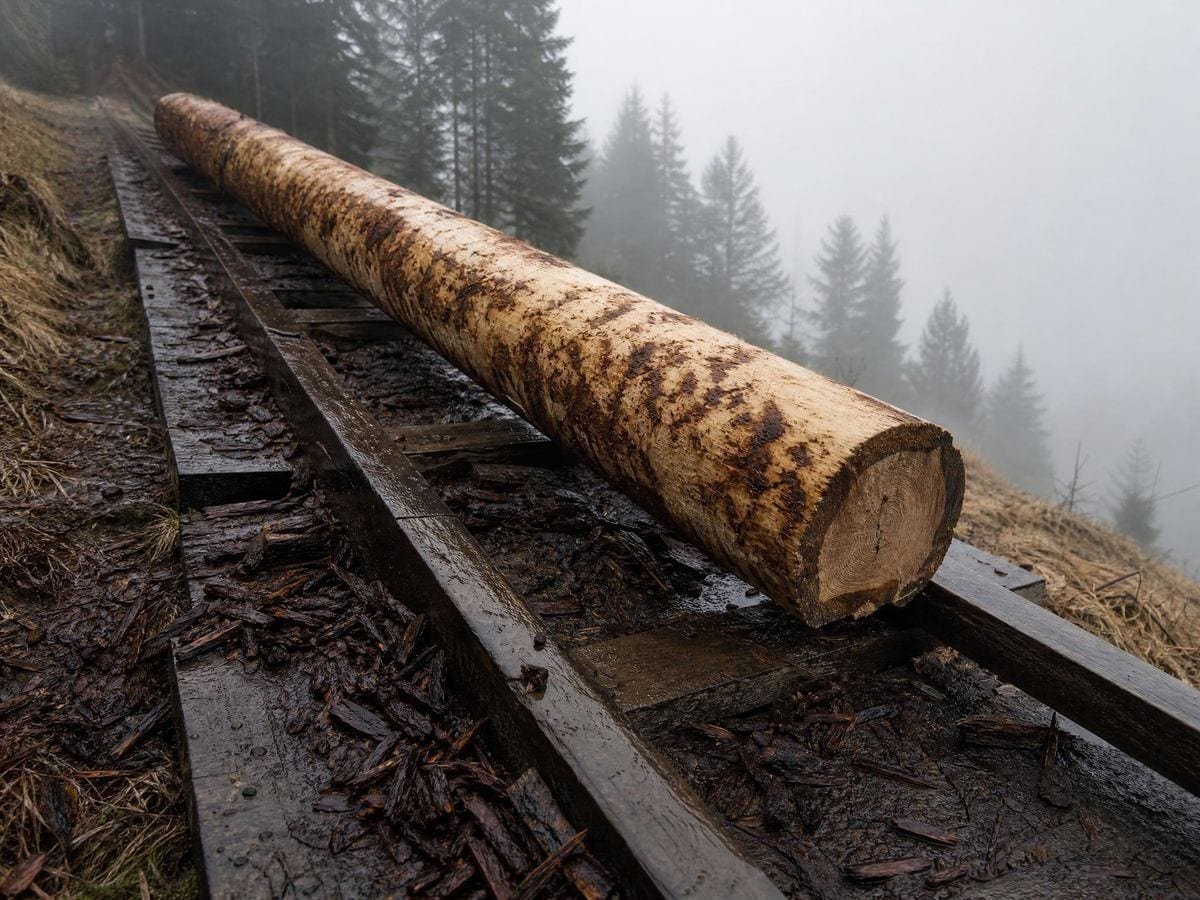
There is a more modest claim that is defensible: travelling against the reading direction is slightly harder work, and a picture that requires it feels less easy. Not ominous, not pessimistic — resistant. And resistance is a real compositional effect with real uses.
Subjects that genuinely fall, collapse, retreat or resist sit naturally on this line for that reason. So do subjects where you want the viewer to slow down, because the resistance is what does the slowing.
In practice the most common use is deliberate discomfort. A figure descending a stair, water falling, a structure leaning, a gesture of refusal — all read more strongly on the descending diagonal than on the rising one, and the strength comes from the friction rather than from any inherent gloom.
The counter-tradition in right-to-left cultures
There is a counter-tradition worth knowing. In cultures whose script runs right to left, the reading direction argument reverses, and there is no reason to expect a Hebrew or Arabic reader to experience these two lines the way the European composition literature says they should.
Which is a useful check on how universal any of this is. A compositional convention that depends on a writing system is a convention, and conventions are worth using precisely and describing accurately rather than presenting as facts about vision.
What the reciprocals add
The optional reciprocals do the same job here as on the rising diagonal: they give a featureless line two definite positions. Each is a perpendicular dropped from one of the two remaining corners, meeting the diagonal at a right angle.
Their positions are computable from the frame alone. With r as the aspect ratio, the feet sit at 1/(r²+1) and r²/(r²+1) along each axis — four thirteenths and nine thirteenths on a 3:2 photograph, exactly a third and two thirds on a √2 sheet.
That is the same pair of numbers the rising diagonal produces, which follows directly from the mirror relationship: reflect the frame and the feet reflect with it, landing at the complementary fractions.
The two constructions together are the full reciprocal armature, and if you find yourself wanting both diagonals at once, that is the overlay to use rather than stacking these two.
The corner-to-corner strictness matters here as much as on the rising line. A compositional element at a similar angle that misses the corners is not this line, and the near-miss produces a specific unresolved quality in a finished picture that is very hard to diagnose without laying the exact diagonal over it.
Reading it against the rising diagonal
The most productive way to use this overlay is in direct comparison with its mirror. Load a photograph and look at it under each in turn. In most pictures one clearly agrees with the subject and one clearly fights it, and which is which is a fact about the picture rather than a matter of interpretation.
If a picture agrees with neither, that is information too: the picture may have no dominant diagonal, and reading it as though it did means imposing a structure rather than finding one.
The horizontal-flip caution is the practical consequence of everything above. Flipping an image converts this diagonal into the other and reverses whatever the composition was doing. For subjects where direction carries meaning, that is a content change and should be treated as one.
Stacking, and sequential work
A practical note on stacking. Turning on both this overlay and the baroque diagonal generator produces a full X across the frame, which reads as a different construction entirely — the crossing at the centre becomes the dominant feature and neither diagonal keeps its direction. If that is what you want, the reciprocal-lines overlay draws it properly and adds the four feet.
For sequential work — comics, storyboards, animation, where the storyboard template generator frames the shots — the choice between the two diagonals compounds across panels. A sequence of descending diagonals accumulates into something a reader feels as pressure well before they could name it, which is why the device is used more deliberately in those media than in single images.
The one place the descending diagonal is close to unavoidable is any subject with real gravity in it: a fall, a pour, a demolition, a landslide. There the line is not a compositional imposition at all — it is a description of what the subject is doing, and the overlay is confirming rather than suggesting.
The sinister diagonal overlay page works through the painted examples, beside the rest of the advanced composition category. The overlay draws over your own image rather than exporting a fixed template because a diagonal on a blank sheet contains no information. Everything interesting is in what lies along it.
The export sizes itself from the paper format and the DPI you choose rather than from your screen. SVG keeps the line editable, which is what you want when it is a construction guide under a drawing.
Everything runs in your browser. Images you load are never uploaded, because there is no server for them to reach. The drawing, the transform and the export all happen on your own machine.
Where a sinister diagonal gets used
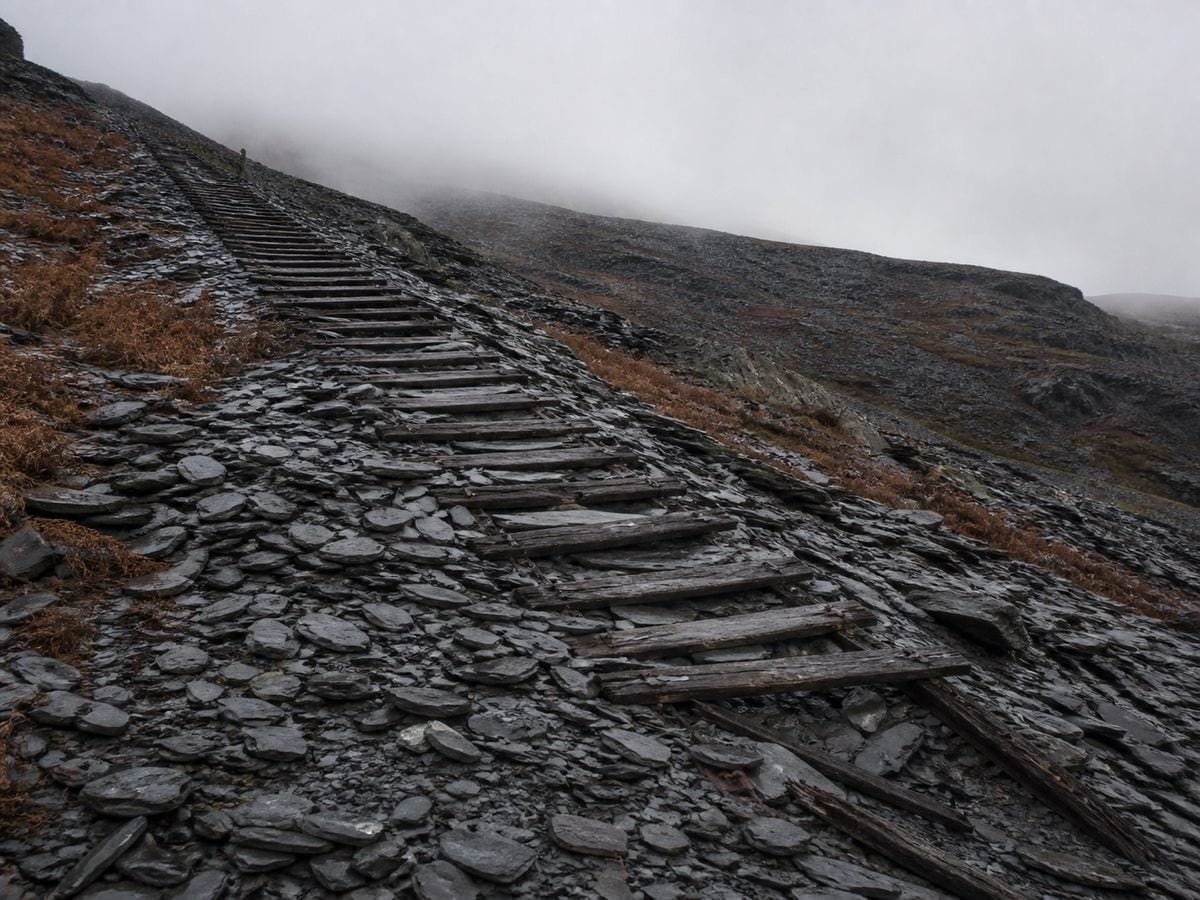
Falling water, a figure on a stair, a leaning structure. The strength comes from the friction, not from any inherent gloom.
It slows a viewer down, which is sometimes exactly what the subject needs. That is the honest version of the claim.
The name is heraldic and means the bearer's left. Students take it as a judgement every single year.
Sinister diagonal: frequently asked questions
The geometry
Why is it called sinister?
From heraldry, where sinister means the left-hand side from the position of the person carrying the shield — the viewer's right. Its counterpart is dexter. It is a position term with no moral content; the ominous English sense came from a separate drift of the Latin word in Roman augury.
What about the "bar sinister" meaning illegitimacy?
A compounded error. The correct term is a baton or bendlet sinister rather than a bar, and its use as a mark of illegitimacy was a late and inconsistent English convention rather than a general rule. The novels of the nineteenth century did the rest.
So does it really read as ominous?
The defensible version is narrower. Travelling against the reading direction is slightly harder work, so a picture that requires it feels less easy — resistant rather than pessimistic. The scanning bias behind that is reasonably supported; the emotional reading is a convention of the tradition.
Does it work the same way for readers of Arabic or Hebrew?
There is no reason to expect so. The reading-direction argument reverses for right-to-left scripts, which is a useful check on how universal any of this is. A convention that depends on a writing system is a convention.
What subjects suit it?
Anything that genuinely falls, collapses, retreats or resists — a figure descending a stair, water falling, a leaning structure, a gesture of refusal. Also anything where you want the viewer to slow down, because the friction is what does the slowing.
What are the reciprocals?
Perpendiculars dropped from the two remaining corners, meeting the diagonal at right angles. They convert a featureless line into one with two definite positions on it, which is what you need when placing something precisely rather than just aligning it.
Where do the reciprocal feet land?
At 1/(r²+1) and r²/(r²+1) along each axis, where r is the aspect ratio — four thirteenths and nine thirteenths on a 3:2 photograph, exactly a third and two thirds on a √2 sheet. Which is the same pair the rising diagonal gives, reflected.
Should I use this and the baroque diagonal together?
If you want both, use the reciprocal-lines overlay instead — it draws both diagonals and all four perpendicular feet as one construction, which is what stacking these two amounts to.
Using it
Can I show both diagonals at once?
Not from this overlay, which draws the falling line and its reciprocals. Stack the baroque diagonal generator alongside it and you have the full X — worth doing once on any picture, because the crossing point tells you where the two axes agree.
The line is lost over a dark photograph. What do I change?
The colour, before anything else. The default is black at 60%, which disappears into a dark frame; white at full opacity is the correct answer there, and auto-contrast will choose for you from the image if you would rather not decide.
Export and print
Can I export just the diagonal to use as a layer?
Yes — the grid-only export gives a transparent PNG with the falling line and, if enabled, the reciprocals, and nothing else. It is the fastest way to test a composition against the axis in whatever you paint in.
Does printing it large need SVG?
It helps. A single long diagonal is the shape rasters render worst, and the stair-stepping is visible on anything above A4. SVG costs nothing extra and prints a clean line at any size.
Choosing a grid
Is this line geometrically different from the baroque diagonal?
No. Same length, same angle, same corners, reflected. Flipping an image horizontally converts each into the other. Any claim that they mean different things is therefore a claim about viewers, not about geometry.
Should I choose this or the baroque diagonal for my picture?
Neither, as a decision made in advance — check both. The picture already runs one way or the other, and the useful question is which axis it is actually built on, not which one you would prefer. Whichever the subject agrees with is the one to keep.
Practical matters
Does anything I load get uploaded?
No. There is no server to upload to. The image is read by your browser, the line is drawn on your machine, and the export is generated locally.
Does the falling-line reading hold outside Western art?
It is a claim about reading direction, so treat it carefully. Left-to-right reading is what makes a falling line feel like a descent; in a context that reads right to left the same line arrives as a rise. Use the geometry with confidence and the emotional reading with caution.
Open the tool Sinister diagonal generator
The same line, the other way
The sinister diagonal and its mirror are one decision. Try both and let the picture decide. Export vector or 600 DPI. No signup, nothing uploaded.
Back to the generator →