
Free Baroque Diagonal Grid Generator
Test the baroque diagonal instantly with our 100% free grid generator. Upload any photo, run the rising line corner to corner with optional reciprocals marking the counter-movement, then export SVG or 600 DPI in seconds. No signup, no downloads needed. Trusted by 60,000+ artists worldwide.
The rising diagonal
The diagonal running from lower left to upper right — the direction a left-to-right reader travels, so movement along it reads as ascent and momentum. Named for the period that used it most deliberately.
1 control, not a fixed picture
Set also show reciprocals. Every one is live on the canvas.
Stacks with composition & photography
Overlays combine, each carrying its own transform, so this one can sit under or over rule of thirds, golden spiral and armature (14-line), and 15 more in the same set.
One line, printed exactly
A single line corner to corner, exported at up to 600 DPI or as an SVG path. Grid-only on transparency to lay over successive frames.
| Ctrl + Z | Undo |
| Ctrl + Y | Redo |
| Esc | Deselect overlay |
| Alt + drag | Free positioning (no snap) |
| Ctrl + scroll | Zoom canvas |
| Ctrl + P | |
| ? | Show this help |
The rising diagonal, and the reason a picture built along it reads as expansive when the identical line mirrored reads as closing down.
The baroque diagonal generator draws one of the 82 composition overlays in Grid Maker Pro, and the rest stack on the same image.
- 1 line
- 2 optional reciprocals
- SVG + 600 DPI export
- Nothing uploaded
What is the baroque diagonal?
The baroque diagonal generator is a free browser tool that draws the single diagonal from the bottom-left corner of a frame to the top-right, with optional perpendicular reciprocals dropped from the other two corners. It draws over your own photograph or a blank canvas, exports SVG and raster to 600 DPI, and never uploads anything.

How to use the baroque diagonal
The diagonal running from lower left to upper right, which reads as ascent, over your own photograph. One line, and the whole frame changes character.
Load the frame
The baroque diagonal runs corner to corner, bottom-left to top-right. There is nothing to adjust — that is the whole construction, and it is why this is the lightest overlay in the catalogue.
JPG · PNG · GIF · WEBP
Test what lies along it
A road, a shoreline, an arm, a stair, the edge between light and shadow. The question is whether the picture's main movement agrees with the line or crosses it, and both answers are useful.
Also show reciprocals
Add the reciprocals if you need points, then export
The perpendiculars from the other two corners meet the diagonal at two computed points. Export SVG for vector or a raster up to 600 DPI sized to your paper.
PNG · JPG · PDF · SVG · up to 600 DPI
Three steps, about a minute. No signup, no upload.
What the Baroque Diagonal Generator does
Corner to corner, rising
The baroque diagonal runs bottom-left to top-right. It is the longest line the frame can contain in that direction, it touches two corners, and it is the only construction here that consists of a single stroke.
Two reciprocals
Perpendiculars from the remaining two corners, meeting the diagonal at right angles. They give the line two points on it rather than an undifferentiated length, which is what you need when placing something precisely.
Feet you can compute
The reciprocal feet land at 1/(r²+1) and r²/(r²+1) along each axis, where r is the frame's aspect ratio. On a 3:2 photograph that is four thirteenths and nine thirteenths.
Reading direction
A viewer trained on left-to-right script scans a picture the same way. For that viewer, a line that rises as the eye travels reads as ascending, and the mirror image as descending. The claim is about the viewer, not the geometry.
The lightest overlay here
One stroke. When the question is whether a picture has a dominant direction, an overlay that adds almost nothing to the frame is the one that lets you see the answer.
Over your own photograph
Load an image and see whether its movement agrees with the line. Then load the sinister diagonal over the same image and see which of the two the picture actually wants.
Baroque diagonal examples: four ways the rising diagonal reads
Baroque diagonal vs drawing it by eye vs a camera's diagonal guide
| Option | Exact corner to corner | Points on the line | Vector export | Cost |
|---|---|---|---|---|
| Grid Maker Pro — baroquethis tool | Yes | Two reciprocal feet, optional | SVG + raster to 600 DPI | Free |
| Drawing it by eye | Approximately | No | n/a | Free |
| A camera's diagonal guide | Sometimes | No | No | Included |
| The full reciprocal armature | Both diagonals | Four eyes | Yes | Free |
Who the baroque diagonal is for: pictures that move
How the baroque diagonal works — The rising diagonal: a claim about viewers, not about geometry
The baroque diagonal and its mirror are the same line reflected — two of the 82 composition overlays that differ only in sign — and they are said to mean opposite things. That is either the most interesting claim in composition or the emptiest, and it is worth working out which.
The construction is one line: bottom-left corner to top-right corner. Nothing else. It is the shortest description of any overlay in this catalogue and by some distance the least to look at.
The claim attached to it is that, for a viewer who reads left to right, a composition organised along this diagonal reads as rising, expansive, optimistic — and that the mirror image, from top-left to bottom-right, reads as falling, closing, ominous.
What the evidence actually supports
Take that claim seriously for a moment, because it is unusual. Every other construction in this catalogue makes a geometric claim: the lines are here, the crossings are there, the proportions are these. This one makes a claim about what happens in a viewer.
The mechanism proposed is reading direction. A person who reads left-to-right scans an image the same way, entering at the left and travelling right. A line that rises as they travel is a line they experience as going up.
That is testable in principle and the evidence is genuinely mixed. There is experimental work suggesting a left-to-right scanning bias in readers of left-to-right scripts, and comparative work suggesting it is weaker or reversed in readers of Arabic and Hebrew. There is much less good evidence that the bias produces the emotional readings that composition books assert.
So the honest position is that the scanning asymmetry is reasonably well supported and the affective interpretation is a convention of the tradition rather than a finding. That is not a reason to ignore it — conventions shared by viewers and makers are exactly how pictures communicate — but it is a reason not to state it as a fact about perception.
Where the name comes from
The name comes from Baroque painting, where strong single diagonals organising an entire composition are a recognisable feature. Rubens is the usual example, and the rising diagonal in his large narrative pictures is doing structural work: it carries the eye from a foreground entry point to the subject.
The Baroque use is not really about optimism. It is about movement. A composition built on a diagonal has direction in a way that one built on horizontals and verticals does not, and after a century of comparatively static Renaissance composition that direction was the point.
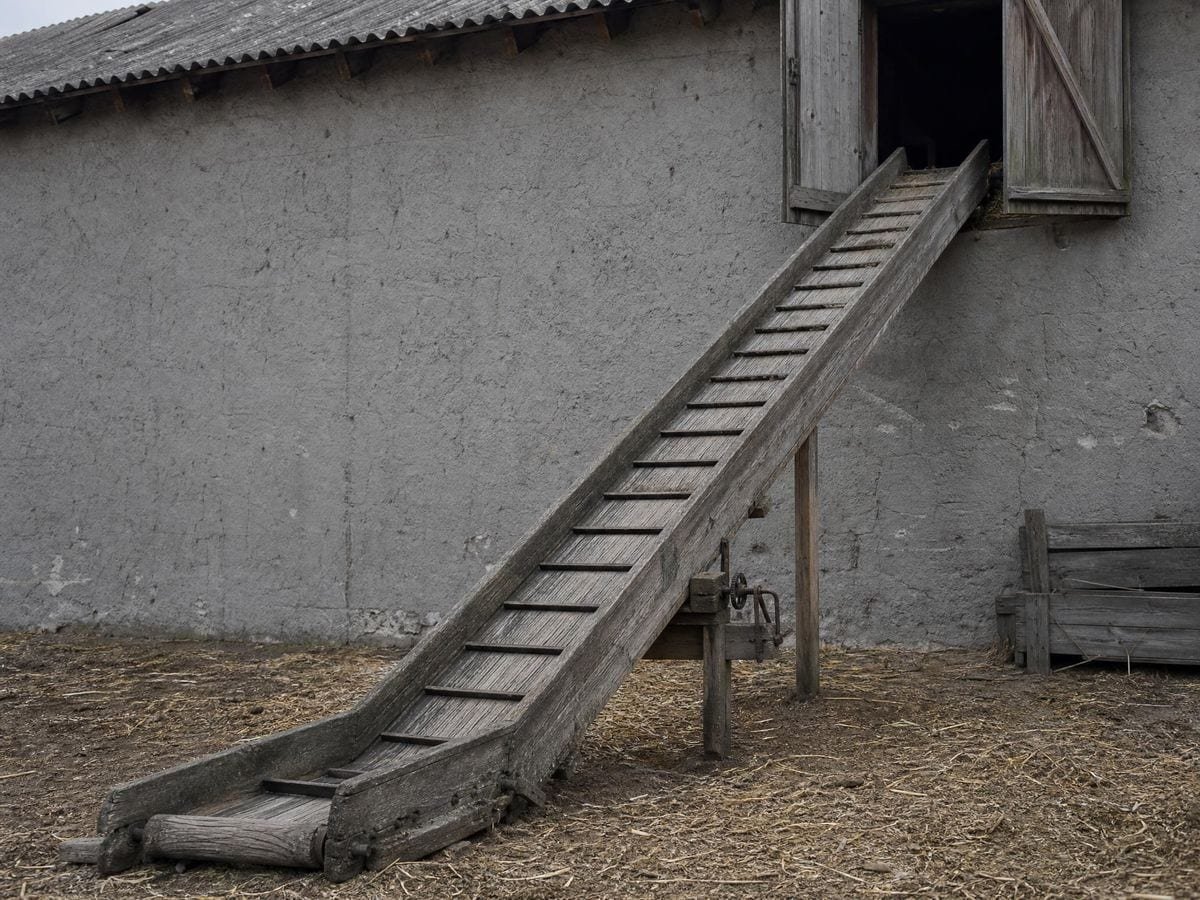
Which suggests a more defensible version of the claim: the rising diagonal produces movement, and movement in the direction of reading feels easier than movement against it. Ease is not optimism, but it is something a viewer can actually feel.
Photography inherited the device wholesale. A road, a shoreline, a fence, a stair, a rank of figures — anything that can be arranged along the diagonal usually is, and in a picture with a clear direction of travel the result reads as having somewhere to go.
Why corner-to-corner has to be exact
The corner-to-corner constraint is stricter than most people apply it. This overlay draws the exact diagonal, which means a compositional line that runs at a similar angle but does not touch the corners is not this line. It is a diagonal; it is not the diagonal.
That strictness is useful. Laying the exact diagonal over a photograph tells you whether your subject's movement really does run corner to corner or whether it merely tends that way, and the difference is visible in the finished picture as a sense of near-alignment that unsettles without announcing itself.
What the reciprocals add
The optional reciprocals address the one weakness of a single line: it has no landmarks. A diagonal tells you a direction but not a position, so anything placed on it is at an arbitrary distance along it.
Dropping a perpendicular from each of the other two corners fixes that. Each meets the diagonal at a right angle, and the two feet are specific points on an otherwise featureless line.
Where they land is computable. Writing r for the frame's aspect ratio, the feet sit at 1/(r²+1) and r²/(r²+1) along each axis. On a 3:2 photograph that is four thirteenths and nine thirteenths — 0.3077 and 0.6923 — and on a √2 sheet it is exactly a third and two thirds.
Those are the same points the full reciprocal armature produces, which is unsurprising once you notice that this construction is half of it: the reciprocal lines generator draws both diagonals and all four perpendiculars, and this draws one diagonal and the two perpendiculars that meet it.
The practical value of the reciprocals is placing a subject at a definite point on a definite line rather than somewhere along it. A figure walking up the diagonal is a composition; a figure at the upper reciprocal foot on the diagonal is a decision.
The reciprocals are off by default, and that default is right for most work. The single line is the overlay's whole proposition, and adding two more strokes to a one-stroke construction changes what you are looking at.
Reading it against the falling diagonal
The most useful thing to do with this overlay is to compare it directly with its mirror. Load an image, look at it under the rising diagonal, then look at it under the falling one. In most photographs one of the two clearly agrees with the subject and the other clearly fights it, and that comparison is more informative than any theory about what either means.
A related and slightly subversive use: if the picture agrees with neither, the picture may not have a dominant diagonal at all, and a diagonal-based reading is being imposed rather than found. That is worth knowing before you commit to a crop.
For a subject that genuinely does move — a runner, a wave, a vehicle, a gesture — the choice between the two diagonals is close to a choice about what the picture says, and it is one of the few compositional decisions that can be made in the viewfinder rather than in the edit.
Why flipping an image matters
The mirroring caution is worth stating plainly. Flipping an image horizontally converts one diagonal into the other, so a picture that was rising becomes falling — which is what the sinister diagonal generator draws. The baroque diagonal overlay page works through painted examples, beside the rest of the advanced composition overlays. For any subject where the direction is part of the meaning, a horizontal flip is a content edit, not a cosmetic one.
That has real consequences in publishing, where images are occasionally flipped to fit a layout. Doing that to a picture composed on a diagonal reverses its reading, and to a picture containing text or a recognisable asymmetry it does worse.
The overlay draws over your own image rather than exporting a fixed template because a single diagonal on a blank sheet tells you nothing at all. The entire question is what lies along it in a specific picture.
The export sizes itself from the paper format and the DPI you choose rather than from your screen. SVG keeps the line editable, which is what you want when it is a construction guide under a drawing.
Everything runs in your browser. Images you load are never uploaded, because there is no server for them to reach. The drawing, the transform and the export all happen on your own machine.
Where the baroque diagonal gets used
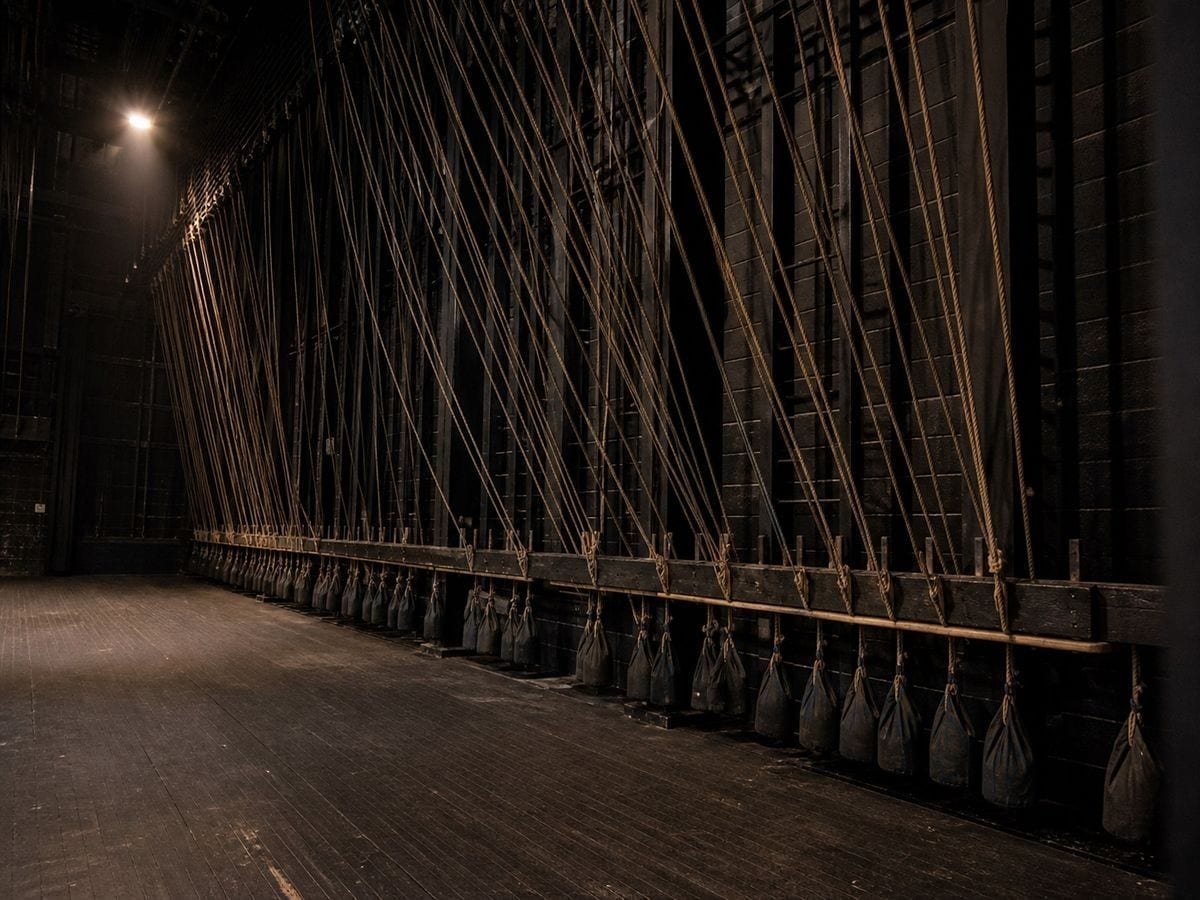
Compare it against its mirror on the same image. One of the two usually agrees with the subject and the other fights it, and that tells you more than any theory.
Rubens is the reference and it is not really about optimism — it is about movement, after a century of static composition.
Flipping an image to fit a layout reverses its diagonal. On a picture composed along one, that is a content edit.
Baroque diagonal: frequently asked questions
The geometry
What is the baroque diagonal?
The single line from the bottom-left corner of a frame to the top-right. That is the entire construction — one stroke, touching two corners, the longest line the frame can contain in that direction.
Does a rising diagonal really read as optimistic?
The scanning asymmetry behind the claim is reasonably supported; the emotional interpretation is a convention of the tradition rather than a finding. Readers of left-to-right scripts do show a left-to-right scanning bias; that this produces optimism is asserted by the tradition rather than demonstrated.
Is there a more defensible version of the claim?
Yes: a diagonal produces movement where horizontals and verticals produce stability, and movement in the direction of reading feels easier than movement against it. Ease is not optimism, but it is something a viewer can actually feel.
Why is it called baroque?
Because strong single diagonals organising a whole composition are a recognisable feature of Baroque painting — Rubens is the usual reference. The Baroque use is really about movement, arriving after a century of comparatively static Renaissance composition.
Does the line have to touch the corners exactly?
In this construction, yes, and that strictness is useful. A compositional line at a similar angle that misses the corners is a diagonal, not the diagonal — and that near-alignment shows in a finished picture as something unsettled that does not announce itself.
What are the reciprocals for?
Landmarks. A single diagonal gives a direction but no positions, so anything placed on it sits at an arbitrary distance along it. The perpendiculars from the other two corners meet it at right angles and give it two definite points.
Where do those points land?
At 1/(r²+1) and r²/(r²+1) along each axis, where r is the aspect ratio. On a 3:2 photograph that is four thirteenths and nine thirteenths; on a √2 sheet, exactly a third and two thirds.
How does this relate to the reciprocal armature?
This is half of it. The full armature draws both diagonals and all four perpendiculars; this draws one diagonal and the two perpendiculars that meet it, so the feet are two of the armature's four eyes.
What happens if I flip the image?
The rising diagonal becomes the falling one, and the picture's reading reverses. For any subject where direction is part of the meaning, a horizontal flip is a content edit rather than a cosmetic one — which matters in publishing, where images are sometimes flipped to fit a layout.
Using it
Which way round should the diagonal run?
The tool draws it from bottom-left to top-right. If your subject rises the other way, flip the image, or rotate the overlay 90° — and note that the sinister diagonal generator draws the falling version drawn as its own overlay, which is easier than rotating this one.
It is one line. What is there to adjust?
Its weight and where it sits. Colour, opacity and width are the whole point on a single-line overlay — a 5px black line at 60% is right over a pale photograph and invisible over a dark one — and dragging the overlay lets the diagonal run corner to corner of a crop rather than of the whole frame.
Export and print
Can I export just the line?
Yes — the grid-only export writes the diagonal, and the reciprocals if you have them on, to a transparent PNG with nothing behind it. Dropped over a painting in progress as a layer, it is the fastest way to check whether the composition really is holding that axis.
Is SVG worth it for a single line?
For printing large, yes. A diagonal is the one shape a raster renders worst — it stair-steps — so a vector file is visibly cleaner on anything bigger than a sheet of A4, and it costs nothing extra to choose.
Choosing a grid
Should I use this or the full reciprocal armature?
This first. One diagonal answers one question — is the picture built on a rising axis — and gives you a clear yes or no. The reciprocal armature adds the perpendiculars and their intersections, which is a richer structure and a much busier overlay to judge against.
Practical matters
Does anything I load get uploaded?
No. There is no server to upload to. The image is read by your browser, the line is drawn on your machine, and the export is generated locally.
Can I use it on a tablet next to an easel?
That is close to the ideal use for it. It runs in Safari and Chrome on iPad and Android, the overlay drags under a finger, and a tablet propped beside the work is the natural place for a single line you are checking a painting against.
Open the tool Baroque diagonal generator
One stroke, one direction
The baroque diagonal is one stroke, and its mirror is the other. Compare them over your picture and let the picture decide. Export vector or 600 DPI. No signup, nothing uploaded.
Back to the generator →