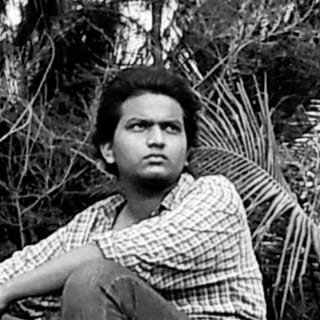
§ Pillar guide · Cinematography
Cinematography composition — frame, shot, sequence
Cinematography is photography under three additional constraints: it moves, it edits into a sequence, and it has to communicate within a script's narrative beats. The composition discipline shares everything with still photography (rule of thirds, golden ratio, leading line) but adds aspect-ratio choice, shot-grammar conventions, and the editing-rhythm of how shots connect. This guide is the comparative reference for working with composition in moving image.
One of the guides behind the 82 composition overlays every visual artist should know and use.
- Cinema invented
- 1895 (Lumière)
- Modern aspect ratios
- 1.85, 2.39, 1.66, 4:3, 9:16
- Standard framerate
- 24fps
- Average shot length
- ~3s (modern); ~13s (1930s)
- Difficulty
- High — temporal + spatial composition
- Prerequisites
- Still composition; basic editing
TL;DR — six load-bearing claims
- Cinematic composition operates at three scales: the frame, the shot (frame + duration + movement), and the sequence (multiple shots edited together).
- Aspect-ratio choice is compositional, not technical — 1.85, 2.39, 1.66, and 4:3 each shape composition differently.
- Rule of thirds dominates cinematography — most camera viewfinders ship with a thirds grid as default overlay.
- Shot grammar (wide / medium / close / extreme close / over-shoulder / point-of-view) is the language; composition operates within those shot types.
- Sequence composition is editing-rhythm: how shot durations and shot-to-shot transitions create the audience's experience of time.
- The 21st-century canon (Lubezki, Deakins, Khondji, Doyle) builds on a 20th-century lineage (Storaro, Toland, Almendros, Nykvist).
In this guide
§ chapter 1 · 130 years
Origin and history
Cinema is 130 years old. The Lumière brothers' first public film projection at the Salon Indien du Grand Café, Paris, 28 December 1895, used 4:3 aspect ratio — the ratio of standard photographic plates of the era. That choice became the default for 60 years.1
The composition language of cinematography develops in the silent era (1895-1927) through Eisenstein's montage theory, Griffith's narrative shot grammar, Murnau's expressionist visual style. Soviet montage theory (Kuleshov, Eisenstein) is the first systematic treatment of how shot composition + editing produces meaning beyond what either alone provides.2
Aspect ratios diversify in the 1950s as television threatens cinema. CinemaScope (2.55:1, 1953), VistaVision, and later Panavision (2.39:1) all aim to give theatrical cinema something television cannot deliver. Today's standards crystallise: 1.85:1 (most narrative film), 2.39:1 (epic / visual cinema), 1.66:1 (European art-house), 4:3 (retro / television-era aesthetic), 9:16 (mobile vertical video).3
Modern cinematography composition descends through several lineages: the Toland deep-focus tradition (Citizen Kane, 1941); the Bergman / Nykvist Northern European naturalism; the Storaro chromatic-symbolism tradition (Apocalypse Now, The Last Emperor); the Deakins American-naturalist precision (No Country for Old Men, 1917); the Lubezki long-take naturalism (Children of Men, The Revenant); and the Doyle Hong Kong New Wave (In the Mood for Love, 2000).4
§ chapter 2 · the frame
The frame
A single frame is a single composition. Standard photographic composition tools apply: rule of thirds, golden ratio, leading line, balance. Rule of thirds dominates because most cameras' viewfinder overlays default to thirds.
The added cinematic constraint: the frame is one of 24 frames per second, and composition decisions need to hold or evolve over the duration of the shot. A static composition that works for 2 seconds may feel static for 20.
§ chapter 3 · aspect
Aspect ratio as composition
Aspect ratio shapes every composition decision. The most-common choices:
- 1.85:1. Modern narrative film standard. A relatively neutral frame; close enough to thirds in both directions to work with most subjects.
- 2.39:1 (anamorphic / Scope). Epic / visual-spectacle frame. Subjects sit on lower thirds with vast lateral negative space. Lubezki / Deakins / Storaro frequently work here.
- 4:3 (1.33:1). Television-era and retro frame. Inverts modern proportions — vertical-leaning, intimate, "talking head" inherent. The Lighthouse (2019) and First Reformed (2017) use 4:3 deliberately.
- 1.66:1. European art-house tradition (Bergman, Bresson). A compromise between 4:3 and 1.85; less common today.
- 9:16 (vertical). Mobile-native; TikTok, Reels, YouTube Shorts. Inverts cinematic conventions entirely.
§ chapter 4 · shot grammar
Shot grammar
Cinematic shot types are standardised:
- Extreme wide / establishing. Subject visible but small in landscape
- Wide / long shot. Full body of subject visible
- Medium / cowboy. Subject from waist up
- Medium close-up. Subject from chest up
- Close-up. Subject's face fills frame
- Extreme close-up. A facial feature (eye, mouth)
- Over-shoulder (OTS). Camera behind one character's shoulder looking at another
- Point-of-view (POV). Camera = character's eyes
- Dutch / canted. Camera tilted; psychological disorientation
- Bird's-eye / top-down. Camera straight down
Each shot type has compositional conventions. Wide shots often work in thirds for subject + leading lines for environment; close-ups often work in golden ratio with subject's eyes on the upper phi grid; over-shoulder shots use the shoulder as compositional anchor with negative space toward the other character.
Two framing terms recur across shot types. Headroom is the space between the top of a subject's head and the top frame edge — too much reads loose, too little reads cramped, and the eyes typically sit on the upper-thirds line. Lead room (or "nose room") is the space a subject looks or moves into; framing a profile with empty space ahead of the gaze, rather than behind it, is how a close-up stays balanced. These are the practical answers to how to frame a close-up in film: set the eye-line on the upper third, give the look its lead room.
§ chapter 5 · movement
Camera movement
Camera movement is composition over time. The major types:
- Pan. Horizontal rotation; explores horizontal landscape
- Tilt. Vertical rotation; explores vertical structure
- Dolly / track. Camera physically moves; parallax reveals depth
- Crane / boom. Vertical camera movement at scale; gives dramatic perspective
- Handheld. Camera moves with operator; intimacy + naturalism
- Steadicam. Stabilised handheld; long takes without dolly
- Drone / aerial. Camera in space; bird's-eye narrative
- Long-take. Unbroken shot of extended duration; Children of Men, 1917
Each movement type shapes composition differently. A long-take handheld in a moving subject's wake (Lubezki's Children of Men car-ambush scene) requires composition that holds across 4+ minutes; a single dolly-track shot requires composition that evolves with parallax.
§ chapter 6 · sequence
Sequence and rhythm
Sequence composition is editing-rhythm. Shot lengths control the audience's experience of time. Modern editing trends faster — Cutting Rate of Mad Max: Fury Road (2015) averages ~3 seconds per shot; the 1930s Hollywood standard was ~13 seconds.5
The composition decision is at the shot-to-shot level. A wide shot followed by a close-up reads as "zoom into significance"; a close-up followed by a wide reads as "pull back to context." Reversed shots (180-degree rule), match-cuts, eye-line matches — all are composition decisions made at sequence level.
§ chapter 7 · color and value
Color and value cinematography
Cinematic color is controlled at three stages: production design (sets + costumes), lighting (gel + temperature), color grading (post-production DI). Vittorio Storaro built an explicit theory of color symbolism — each major film color-graded to a thematic palette (Apocalypse Now: orange-vs-blue; The Last Emperor: ochre to crimson per emperor's life stage).6
Value composition (light vs dark within the frame) often does more work than color. Gordon Willis's The Godfather (1972) is the canonical low-key cinematography reference — deep shadow as primary compositional element.
§ chapter 8 · documentary
Documentary vs narrative composition
Documentary cinematography accepts less control over framing — the subject lives outside the camera's command. The compositional discipline shifts: cinematographers in vérité documentary practice (Frederick Wiseman, Pennebaker, Maysles brothers) compose during shooting via anticipation rather than via setup. The Maysles' Salesman (1969) is the canonical reference.7
Modern hybrid documentary (Werner Herzog, Errol Morris) brings more compositional control while retaining documentary subject matter. The Lubezki / Iñárritu collaborations on long-take narrative borrow from documentary technique.
Comparison table
| Mode | Compositional control | Editing rhythm | Canonical reference |
|---|---|---|---|
| Studio narrative | Full | Variable (1-13s per shot) | Gordon Willis, The Godfather (1972) |
| Anamorphic epic | Full; wide frame | Slower (5-10s) | Vittorio Storaro, Apocalypse Now (1979) |
| Long-take naturalism | Choreographed; sustained | Very slow (3-9min per shot) | Emmanuel Lubezki, Children of Men (2006) |
| Documentary vérité | Anticipatory; minimal setup | Cut from continuous material | Maysles brothers, Salesman (1969) |
| Modern action | Full but fragmented | Very fast (1-3s per shot) | George Miller, Mad Max: Fury Road (2015) |
Famous cinematographers
Gregg Toland (1904-1948). Deep-focus pioneer; Citizen Kane (1941).8
Sven Nykvist (1922-2006). Bergman's long-time collaborator; Northern European naturalism.
Gordon Willis (1931-2014). The Godfather; low-key cinematography canon.
Vittorio Storaro (b. 1940). Color symbolism theory; Apocalypse Now, The Last Emperor.6
Roger Deakins (b. 1949). Coens / Villeneuve / Mendes; American naturalist precision.9
Emmanuel Lubezki (b. 1964). Iñárritu / Cuarón / Malick; long-take naturalism.
Christopher Doyle (b. 1952). Wong Kar-Wai's cinematographer; In the Mood for Love (2000).
Common pitfalls
Centering when off-center serves better
Dead-center composition reads formal, static. Cinema typically wants off-center.
Fix: use thirds; reserve center for symmetric ceremonial shots.Wrong aspect ratio for the story
2.39 anamorphic on an intimate character study fights the story; 4:3 on an action epic fights the spectacle.
Fix: pick aspect ratio first based on story register; compose to fit.Cutting too fast for the composition
Shots cut before the composition registers. Audience misses what the frame was doing.
Fix: hold for 2-3 seconds minimum on any composed shot.Camera movement without purpose
Handheld for handheld's sake; dolly for dolly's sake. Movement must serve content.
Fix: ask "what does this movement reveal?" Anything not answerable: lock the camera.Lighting and composition aren't decoration. They are the story being told in a way only cinema can tell it.— Vittorio Storaro, Society of Cinematographers lecture (2008).6
Companion kit
Frequently asked questions
What aspect ratio should I shoot?
1.85:1 for typical narrative film; 2.39:1 (anamorphic / Scope) for epic or visual-spectacle; 4:3 for retro / television-era aesthetic; 1.66:1 for European art-house.
Is rule of thirds the right framing for film?
Usually. The viewfinder grid in most cameras is rule of thirds. Roger Deakins and Emmanuel Lubezki both use thirds as default; phi is rare in cinematography.
What is the difference between 1.85 and 2.39 aspect ratio?
1.85:1 is the standard narrative frame — close to a 16:9 rectangle, roughly neutral in both directions, and forgiving for medium and close-up shots. 2.39:1 (anamorphic / Scope) is far wider; it lengthens the frame laterally, so subjects sit low with wide horizontal negative space, favouring landscape, two-shots, and epic register over intimate ones. Pick the register first, then compose.
What is lead room in cinematography?
Lead room (also called "nose room") is the empty space left in front of a subject's gaze or direction of movement. A moving or looking subject framed with space ahead of it reads balanced; the same subject framed with space behind it reads cramped and off. With headroom it is one of the two everyday framing adjustments inside any shot.
What framerate should I shoot?
24fps for traditional cinematic feel. 30fps for video / streaming. 60fps for high-frame-rate productions (Ang Lee's Billy Lynn). Sports use 60+ fps.
How long should a shot last?
Modern narrative averages 3-5 seconds. Long-take filmmakers (Lubezki, Cuarón, Iñárritu) push to 3+ minutes. Standards have accelerated steadily since the 1930s.
What's the 180-degree rule?
Once an axis of action (typically a line between two characters) is established, the camera stays on one side of that line so screen direction is consistent across shots. Breaking the rule disorients the audience — sometimes intentionally.
Vertical (9:16) video — composition rules?
Inverted from traditional cinema. Subject in upper third, vast lower negative space. Movement vertical (up/down) reads better than horizontal in 9:16. Mobile-platform conventions shape this.
Storyboard or improvise composition on set?
Hitchcock storyboarded every shot. Lubezki improvises within rehearsed action. Both work; depends on the production.
How do you direct the audience's eye?
Light placement, contrast, focal length, framing (lead-lines + thirds intersections). Lubezki: "I always know where the eye will go because I lit it that way."
Does color grading matter for composition?
Yes — value contrast within a frame is shaped at the grade. Storaro grades to thematic palettes; Deakins grades to support natural light; modern blockbuster cinematography often grades to teal-orange for value separation.
How is cinematography different from still photography?
Adds temporal composition (shot duration), movement (camera + subject through time), and edit-cut transitions. The frame-level discipline is shared.
Should I use phi grid in cinematography?
Rare but possible. Storaro uses phi-aligned compositions occasionally. Default is thirds; phi appears for centered ceremonial moments.
Best learning path for cinematography?
Watch films shot frame-by-frame. Re-create shots from Citizen Kane, The Godfather, In the Mood for Love, Children of Men. The viewing volume is the discipline.
Related pillars, leaves, and glossary
References
- Sadoul, Georges. Histoire générale du cinéma, vol. 1: L'Invention du cinéma 1832-1897. Denoël (1973). First Lumière screening documentation.
- Eisenstein, Sergei. Film Form: Essays in Film Theory. Harcourt (1949) / Harvest reprint (1969). ISBN 0-15-630920-3.
- Belton, John. Widescreen Cinema. Harvard UP (1992). ISBN 0-674-95249-0.
- Brown, Blain. Cinematography: Theory and Practice, 3rd ed. Routledge (2016). ISBN 978-1-138-86472-1.
- Salt, Barry. Film Style and Technology: History and Analysis, 3rd ed. Starword (2009). ISBN 0-9509066-2-0.
- Storaro, Vittorio. Writing with Light. Aperture (2002). ISBN 1-931788-04-3.
- Mamber, Stephen. Cinema Verite in America: Studies in Uncontrolled Documentary. MIT Press (1974). ISBN 0-262-13110-9.
- Bordwell, David + Thompson, Kristin + Smith, Jeff. Film Art: An Introduction, 11th ed. McGraw-Hill (2016). ISBN 978-0-07-786135-1.
- Deakins, Roger. Byways: A Photographic Journey. Damiani (2021). ISBN 978-88-6208-708-4.
- Murch, Walter. In the Blink of an Eye: A Perspective on Film Editing, 2nd ed. Silman-James Press (2001). ISBN 1-879505-62-2.
- Bazin, André. What is Cinema?, vols 1 and 2. UC Press (1967 / 1971). ISBN 0-520-24227-X.
- Bordwell, David. Figures Traced in Light: On Cinematic Staging. UC Press (2005). ISBN 0-520-24130-3.
- Schmidt, Rob. Feature Filmmaking at Used-Car Prices. Penguin (2000). ISBN 0-14-100237-3.
- Block, Bruce. The Visual Story: Creating the Visual Structure of Film, TV and Digital Media, 2nd ed. Focal Press (2007). ISBN 978-0-240-80779-2.
- Almendros, Néstor. A Man with a Camera. Farrar, Straus and Giroux (1984). ISBN 0-374-20084-5.