Camera and viewfinder centring
Centre marks and grid lines in viewfinders and rear screens exist so a photographer can place a subject on the centre, or deliberately off it, with a reliable point of reference.
The cross-hair grid is the plainest overlay in the set: one horizontal line and one vertical line, crossing at the exact centre of the canvas — 50% across, 50% down — with an optional reticle ring at the intersection. Its job is not to tile the canvas but to make one point, the centre, visible. Use it to centre a radial subject, to check bilateral symmetry, or to register one element against another. There is almost no mathematics here and no single inventor — and that is the honest pitch. This page covers what the overlay shows, the short construction, where the cross-hair genuinely earns its place, and when you want something richer.
One of the 82 composition overlays every visual artist should know and use.
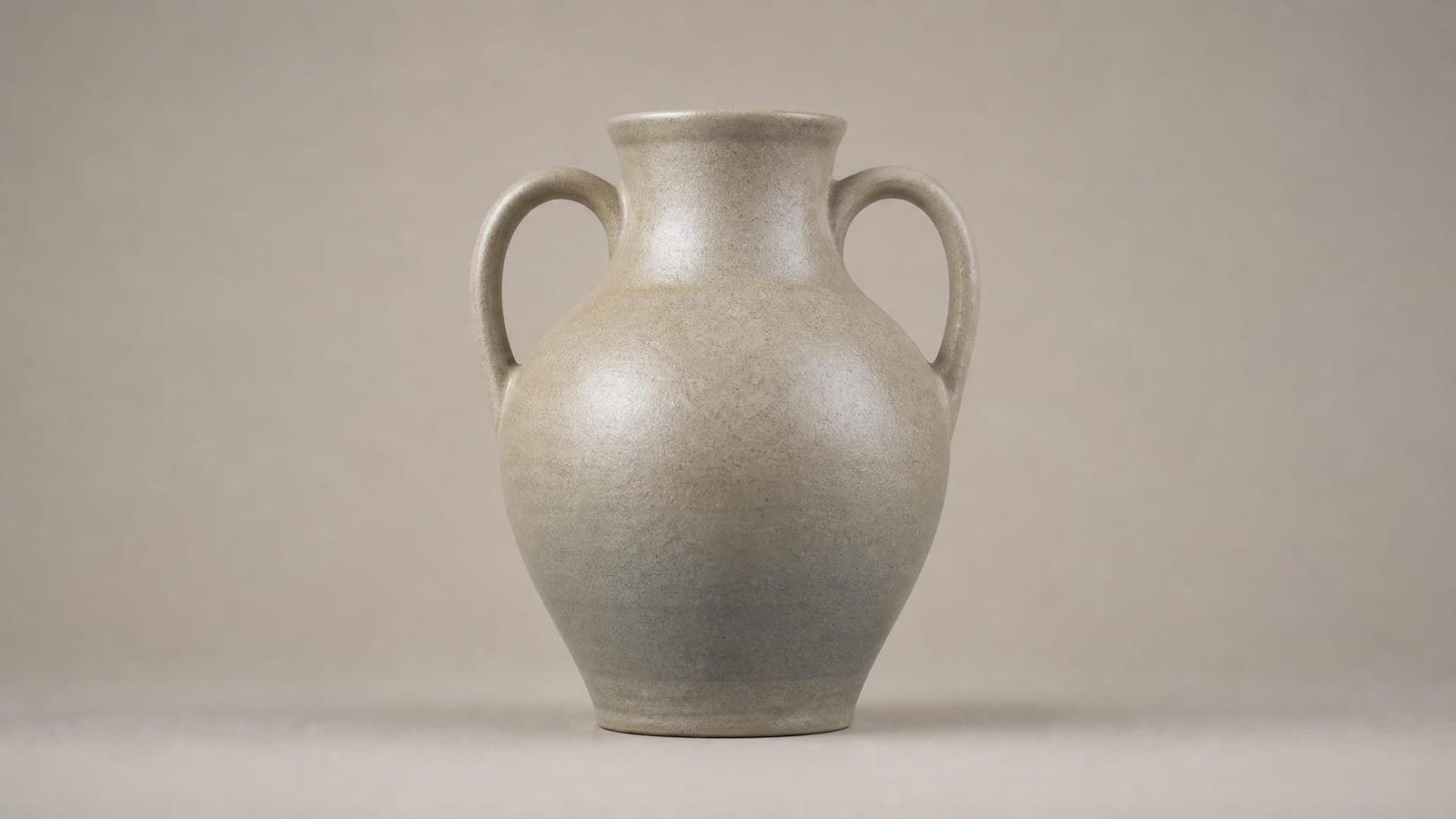
Drop the cross on the subject's centre and the two lines tell you, at a glance, whether the eye-line sits on the horizontal and the central feature on the vertical. Drag the handle to compare with and without the overlay.
The cross-hair lays down exactly two lines: one running horizontally through the canvas and one running vertically, meeting at the centre. By default the meeting point sits at 50% of the width and 50% of the height, dividing the frame into four equal quadrants. An optional reticle ring — or a pair of concentric rings — can sit at the intersection, and a small dot can mark the exact centre point. Line weight and opacity are adjustable, from a faint grey hairline for an unobtrusive check to a firm black reference for explicit registration.
That is the whole overlay. A full grid imposes structure across the entire canvas; the cross-hair imposes it at a single point and leaves everything else free. Because it is so quiet, it does three jobs cleanly: it centres a radial or bilaterally symmetric subject, it gives a straight edge to check symmetry against, and it provides a fixed reference to register one element against another. It does not suggest where content should go — it only tells you where the centre is.
There is almost none, and that is the point. The horizontal line sits at exactly 50% of the canvas height; the vertical line sits at exactly 50% of the width; they meet at the centre point (½ w, ½ h). The optional reticle rings are circles centred on that point at whatever fixed radii you choose. There are no angles to solve, no foreshortening factor, no proportion to derive. Where most overlays earn their keep through a construction you have to get right, the cross-hair earns its keep by being trivially correct every time — two perpendicular lines and a centre. The honest summary is that the cross-hair is a placement of straight edges, not a piece of geometry.
The cross-hair has no single inventor, and claiming one would be invention. What is well documented is the idea the cross-hair serves: the significance of the centre and of bilateral symmetry in how we read a picture. Rudolf Arnheim's The Power of the Center frames composition as a tension between a concentric system, organised around a central point, and a Cartesian system of horizontals and verticals — exactly the two structures a cross-hair makes visible.1 His earlier Art and Visual Perception sets out the perceptual weight the centre of a frame carries.2
The centre also has a literal lineage in perspective. Leon Battista Alberti's On Painting (1435–36) names a "centric point" on the picture plane toward which the construction is organised — the point a draughtsman fixes first.3 Samuel Edgerton's history of that rediscovery traces how central the centric point became to Renaissance practice.4 Studies of pictorial geometry by Charles Bouleau and of proportional armatures by Jay Hambidge show that the central axis is one of the oldest organising lines artists have drawn.56 In design and architecture the same instinct survives as the central axis of a symmetric layout, treated as a basic ordering principle by Francis Ching and as a structural reference by Josef Müller-Brockmann.78
It is a tool, not a tradition. The cross-hair as an overlay belongs to the practical world of reticles and graticules in optics, registration and crop marks in printing, alignment marks in surveying, and the quick symmetry check in drawing. These uses arose independently, for the same plain reason — a centre is easier to hit when it is marked — and none of them descends from a founding figure or document.
The intellectual content is about the centre, not the cross. Everything genuinely interesting here is borrowed: it concerns centred composition and symmetry, subjects with a real literature. The two lines themselves are just the most direct way to point at the centre. We resist dressing the cross-hair in a pedigree it does not have.
| If you want to... | Use the cross-hair | Don't use it for... | Difficulty |
|---|---|---|---|
| Centre a logo or symbol in its clear-space | Two lines fix the exact centre with no other clutter on the canvas | Optical-balance tuning, where the maths-centre and the eye-centre differ | Beginner |
| Check that a subject is bilaterally symmetric | The vertical line is a straight yardstick to compare the two halves against | Generating symmetry — the line measures it, it does not create it | Beginner |
| Register one element or layer against another | A fixed centre and two axes give a repeatable alignment reference | Composing a whole layout — it marks a point, not a structure | Beginner |
| Rough in a scope, target, or reticle graphic | Two lines plus optional rings are literally the reticle shape | Atmospheric or asymmetric compositions with no central anchor | Beginner |
| Anchor the centre while another grid handles placement | Pairs cleanly with thirds or a radial grid, which often leave the centre implicit | Deciding placement on its own — reach for the richer overlay for that | Intermediate |
Not masterworks — documented domains. The two-line cross-hair turns up independently across these fields, each for the same plain reason: a marked centre is easier to hit than an unmarked one.
Centre marks and grid lines in viewfinders and rear screens exist so a photographer can place a subject on the centre, or deliberately off it, with a reliable point of reference.
The crossed lines of a scope or finder reticle mark the optical axis. Rings and ticks added around the cross let the user gauge distance from centre — the reason the optional reticle exists in this overlay.
Crossed registration targets let separate ink plates line up to a shared centre, and corner crop marks frame the trim. Both are cross-hairs put to a strictly mechanical job.
A reticle etched into a microscope eyepiece marks a fixed centre and scale over the live image, so a feature can be centred and measured. It is a cross-hair built into the optics.
The crossed reticle in a level or theodolite gives a precise line of sight to align against a staff or target. Centring on a point is the whole transaction.
A vertical centre line dropped through a face, a vase, or a butterfly turns a symmetry judgement into a measurement: the two halves either match the line or they do not.
A marked centre is tempting to fill, but the geometric centre is the most stable point in a frame and a subject parked there can read as static or inert. Arnheim treats centred placement as a deliberate, sometimes risky choice — not a default.
The cross-hair does not propose where content should go; it has nothing to say about the three quarters of the frame away from the centre. Used as if it were a layout system, it leaves a composition under-structured.
Because it looks too simple to matter, the cross-hair often gets skipped on exactly the tasks it suits — verifying symmetry, registering layers, levelling a horizon — where a richer grid would only add noise.
Snapping every element to the exact 50% / 50% point produces a rigid, sometimes lifeless result. The cross-hair makes dead-centre easy, which makes it easy to overuse.
Drop the vertical through a face, a vehicle, or any bilaterally symmetric subject and the cross-hair becomes a symmetry yardstick: the two halves either match the line or they do not, and the mismatch is the correction. The horizontal does the same for an eye-line or a waterline. It is most useful early, before features are committed, when establishing the central axis saves redrawing later. Once the axis is set, many illustrators turn the cross-hair off and switch to a placement grid.
The cross-hair is the simplest framing check there is: is the horizon level on the horizontal, is the subject where you meant it relative to the vertical. Because it marks only the centre, it pairs naturally with the rule of thirds — the cross fixes the middle while the thirds mark the off-centre placements. Used as a level reference it is quicker to read than a full grid, and it does not compete with the image for attention while you compose.
For logo and mark work the cross-hair fixes the optical centre of a clear-space frame, the reference everything else is balanced against. In layout it marks the central axis of a symmetric composition — a basic ordering move documented across the grid-systems literature. The honest caveat carries over: the mathematical centre and the visual centre are not always the same, so treat the cross as a starting reference and nudge for optical balance.
In prepress the crossed registration target is how separate plates find a shared centre, and crop marks frame the trim — both are cross-hairs doing mechanical work. For printmakers and anyone registering layers, the fixed centre and two axes give a repeatable alignment that survives across passes. Here the overlay is valued precisely because it is dumb and exact: two lines, one centre, no interpretation.
A marked centre is not a decision about the picture — it is only the place to start measuring one. The cross tells you where the middle is; the work is deciding whether the subject belongs there.
Grid Maker Pro editorial

Illustrative composites of how the tool gets used in practice — not quotes from named individuals.
On a portrait I drop the vertical first and check the eyes against the horizontal. It is the least clever overlay I use and the one I reach for most.
For a two-colour print I line both plates to the same centre cross. No rings, no thirds — just two lines doing exactly one job, which is what registration needs.
I leave the cross on while I frame, mostly as a level. It tells me the horizon is straight without arguing with me about where the subject should go.
Drop a reference image. The cross-hair overlay applies in one click. Free, in your browser.
Launch Grid Maker Pro →Cross-hair grid is free to use here and will stay that way. When the plan on screen needs to become marks on paper, the browser reaches its limit — there's no camera to register the image to your page. The Grid Maker Pro AR app adds exactly that: hold the phone over the paper and trace your reference directly, then keep working with the same overlay set.
Get the AR tracing app → Free web tool, free forever · AR tracing is the separate paid app