
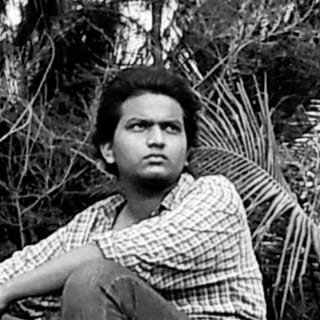
Tight headshot
Eyes on the upper fifth horizontal (20%), face on an inner vertical. The head stays anchored and large while the eye-line lands where the viewer expects it.
The rule of fifths draws a 5×5 grid on any image — lines at 20%, 40%, 60%, and 80% of each dimension, giving 16 intersection points instead of the rule of thirds' four. The inner intersections sit closer to the centre, which is why portrait and product photographers reach for it when thirds pushes the subject too far toward an edge. It is a modern teaching refinement, not a classical rule — and this page is honest about that.
One of the 82 composition overlays every visual artist should know and use.

On a tight three-quarter portrait, the eye lands on the inner fifth intersection at 40% — closer to centre than thirds, which keeps a large head anchored without a bullseye reading.
The rule of fifths overlay draws four vertical lines and four horizontal lines, dividing the frame into a 25-cell 5×5 grid with 16 intersection points. This 20/40/60/80 division sits at 20%, 40%, 60%, and 80% of the width and height. Any of the 16 intersection points can carry the focal point, but they are not equal in feel: the inner four (at 40% and 60% in both axes) produce a tight, refined off-center subject placement, while the outer twelve push the subject toward an edge and open up negative space on the other side.
That choice is the whole point of the grid. The rule of thirds gives you exactly one ring of intersections at 33% and 67%. Fifths gives you two rings — one tighter than thirds, one looser — so you can match the placement to how much of the frame the subject fills. The overlay highlights the inner four power points because they are the ones that solve the problem fifths was invented to solve: keeping a large subject off-centre without throwing it at the edge.
The grid is the simplest division on this site — equal fifths of each dimension:
x = {0.2, 0.4, 0.6, 0.8} · W y = {0.2, 0.4, 0.6, 0.8} · H
A few consequences worth noticing:
Because the positions are exact fractions, the live overlay renders identically at any image size and any zoom.
The rule of thirds has a paper trail. The painter and engraver John Thomas Smith coined the phrase in Remarks on Rural Scenery (1797), proposing a two-thirds-to-one-third division of light and shade as "a good rule" for landscape.1 Systematic division of the picture surface as a teaching device is older still: Henry Rankin Poore's Pictorial Composition and the Critical Judgment of Pictures (1903) walks through balance, subordination, and the placement of the principal mass with diagrammed frame divisions.2 The general principle — that a subject placed off the dead centre reads as more dynamic than one placed on it — is well grounded in the perception literature, most influentially in Rudolf Arnheim's Art and Visual Perception, which analyses the special "weight" the centre exerts and why compositions negotiate against it.3
The honest position is this: dividing the frame to place a subject off-centre is centuries old and well documented. The specific 5×5 grid is not.
You will find claims online that the rule of fifths was "taught by Whistler," "used by Sargent," or handed down from nineteenth-century academic practice. These do not survive checking. No surviving lecture, treatise, or studio document defines a five-by-five compositional grid as a named rule from that period, and attaching famous names to it manufactures a pedigree the convention does not have. (An earlier version of this page itself carried such claims; they have been removed.)
What can be said truthfully is that the rule of fifths is a modern teaching refinement, popularised in 21st-century photography instruction as photographers looked for a placement grid better suited to tight portraits and product shots than thirds.4 Contemporary composition manuals treat grids of this kind as practical placement aids rather than inherited law — Michael Freeman's The Photographer's Eye and Bert Krages' Photography: The Art of Composition both frame the thirds grid (and its denser variants) as one tool among several, to be chosen by the subject.56 That is exactly the spirit in which fifths is useful: not as a rule that must be obeyed, but as a finer ruler than thirds when you need one.
| If you want to... | Use rule of fifths | Don't use it for... | Difficulty |
|---|---|---|---|
| Frame a tight head-and-shoulders portrait | Inner intersections at 40/60% keep a large head anchored without bullseye centring | Wide environmental portraits (use rule of thirds) | Beginner |
| Place a single hero product on a clean background | The inner ring reads as balanced-but-deliberate, the commercial sweet spot | Lifestyle product shots with several elements (use an armature) | Beginner |
| Compose a close-up where thirds feels too aggressive | Fifths gives a gentler off-centre option than thirds | Fast reportage where you cannot recompose (use thirds) | Beginner |
| Use dramatic edge placement with lots of negative space | The outer ring at 20/80% pushes the subject further than thirds | Symmetric or reflective subjects (use centre-cross) | Intermediate |
| Have more placement options than thirds offers | 16 intersections vs four — pick the ring that matches subject size | Broad-band landscapes (the grid over-fragments) | Intermediate |
The rule of fifths has no canon of famous paintings built on it — it is too new and too informal for that. Instead, here are six everyday shooting situations and where the grid puts the subject.
Eyes on the upper fifth horizontal (20%), face on an inner vertical. The head stays anchored and large while the eye-line lands where the viewer expects it.
Subject facing camera-left sits on the right-inner intersection at 60%, leaving looking-room on the left without drifting to the edge as thirds would.
A single object on an inner intersection reads as deliberate and balanced — the look commercial product photography aims for without dead-centring.
The outer intersection at 20% throws the subject hard to one side, letting empty space carry mood — more dramatic than thirds would allow.
Eyes on the upper fifth, body filling the lower frame. The gentle off-centre keeps a fast-moving subject from sliding to the bullseye.
Place each subject on a diagonally opposed inner intersection. The pair reads as balanced tension rather than a centred line-up.
The 5×5 grid is dense. On a broad scene built from horizontal bands of sky, land, and water it over-fragments the frame and gives you too many near-equivalent options.
Fifths has a tempting line through the exact middle. Parking the subject on it throws away the entire reason for using an off-centre grid and reads as static.
Believing fifths carries historical authority leads to applying it where it doesn't help, just because it feels "more advanced" than thirds.
Portrait painters use the fifths grid the way they use any division of the canvas — at the block-in stage, to decide how high the eye-line sits and how far the head leans off-centre. The inner ring is useful for bust-length and head-and-shoulders formats where a golden-section division would place the features too low. It is a placement aid, not a proportion system, so most painters drop it once the major masses are set.
This is the grid's home turf, and the rule of fifths vs thirds question comes up most often in portrait photography. Portrait and product shooters use the inner intersections for tight crops where the rule of thirds drifts the subject too far toward an edge. In practice the workflow is: compose loosely in-camera, then choose between a thirds crop and a fifths crop in post. Many photographers keep both overlays stacked and pick per image rather than committing to one rule — which is also how to decide when to use fifths instead of thirds.
Designers rarely build layouts on a 5×5 grid — column systems serve that purpose better. But the fifths division is handy for placing a single focal element in a hero image or social card: an inner intersection gives a balanced-but-deliberate position that survives cropping to several aspect ratios. Treat it as a focal-point guide layered over a separate layout grid.
The fifths grid has no role in plan or elevation proportion — proportional systems like the root rectangles or the Modulor do that work. Where architects meet it is in presentation photography: shooting a building or interior for a portfolio, the fifths inner ring helps place a single architectural feature off-centre without losing it to the frame edge.
"The rule of thirds, like other compositional aids, is a starting point, not a law. The grid is there to help you decide where to put things — and to be broken the moment a stronger arrangement presents itself."
Michael Freeman, The Photographer's Eye (2007)5
Illustrative composites of how the tool gets used in practice — not quotes from named individuals.
For tight headshots I keep the fifths overlay on. The inner ring is where a big head wants to sit — thirds always pulls it a touch too far.
I stack thirds and fifths and choose per image. The bookmarkable URL means the exact pair reopens with one click.
Free and browser-only is the right shape for this kind of tool. Lower friction means I actually use it, not save it for special occasions.
Drop a reference image. The rule of fifths overlay applies in one click. Free, in your browser.
Launch Grid Maker Pro →You can use the Rule of fifths overlay overlay here for nothing, today and always. What a browser still can't do is get the picture itself onto paper — that needs a camera. The Grid Maker Pro AR app floats your reference over the real page through your phone so you trace the outlines straight onto the surface, then build on them with the same overlays you use here.
Get the AR tracing app → Free web tool, free forever · AR tracing is the separate paid app