
The standing figure canon
Head height as the unit: every landmark from chin to ankle lands on a count from one to seven or eight.
Pick one unit and measure everything against it. Instead of estimating that "the eye is about a fifth of the way down," you fix a single reference — a head height, a hand, a doorway — and count: chin at one head, nipples at two, navel at three. Using head height as a unit turns proportion into arithmetic, which is why ateliers teach it as the first systematic measuring tool, before the eye is trained to judge relative distances unaided. This is the sight-size method made countable — comparative measurement drawing reduced to whole multiples — traceable from Vitruvius through Dürer and Bargue to the Art Students League. Here is the canon, the verified history, and how to measure with it.
One of the 82 composition overlays every visual artist should know and use.
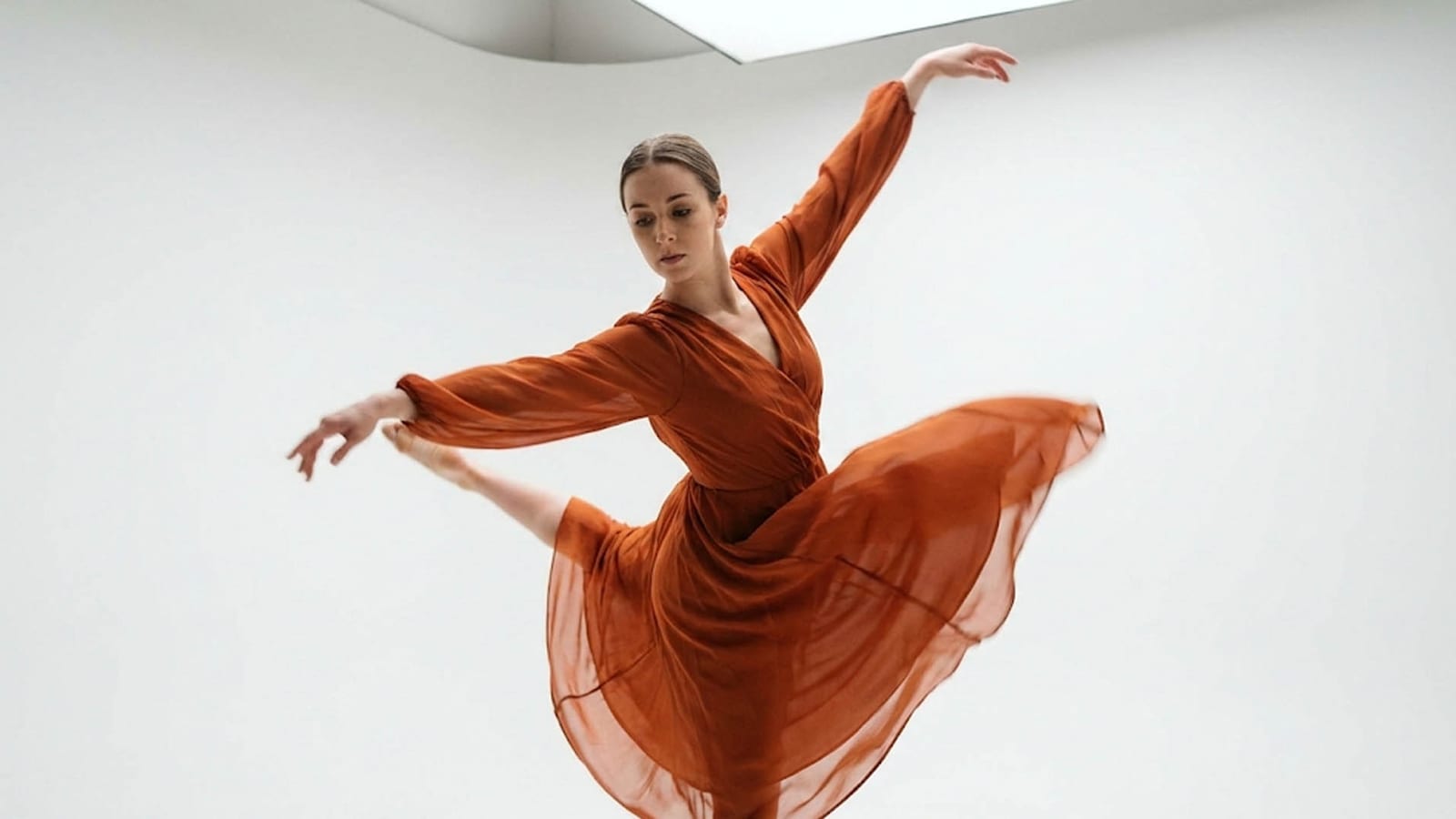
On a figure, the head height is the unit: chin at one, nipples at two, navel at three, hip at four, knee at five, ankle near seven. Each landmark becomes a count rather than a guess.
The fixed-measurement overlay lays out evenly-spaced reference marks tied to one unit you choose — a head height, a hand, a doorway, a chair seat. The marks run at one unit, two units, three units and so on across the subject, horizontally and vertically. You set the unit and the count, and the overlay populates the marks so you can read each landmark as a position on the count rather than as a proportion to estimate. That is, in practice, how to measure proportions in drawing without instruments: choose a reference unit, then count multiples.
Where the grid method shows position relative to the whole canvas, fixed measurement shows position relative to a single repeating unit. For a standing figure the classical canon makes this concrete: chin at one head, nipples at two, navel at three, hip at four, knee at five, calf at six, ankle at seven. Counting heads replaces proportional estimation, which is exactly why it is the first measuring tool taught before the eye learns to judge unaided.
The figure canon expresses a whole body as a count of one unit — the head height — so proportion becomes arithmetic:
7 heads = realistic · 8 heads = ideal · 9 heads = heroic
The point is to count, not to guess. Try it in the live tool — set the unit and the marks populate, so each landmark lands on a number you can read directly.
c. 15 BC — Vitruvius. The head-multiple canon traces to Vitruvius, whose De architectura sets out the proportions of the well-formed human body as a system of repeating fractions — the source behind the "Vitruvian Man" tradition.1
1528 — Dürer. Albrecht Dürer's Four Books on Human Proportion gave detailed head-multiple measurements for a range of figure types, systematising the canon for the Renaissance workshop.2
1889 — Richer. Paul Richer's Artistic Anatomy codified the proportions of the figure with scientific measurement, and remains a standard reference (translated by Robert Beverly Hale) for atelier proportion teaching.3
1866 / 20th century — Bargue and the Art Students League. Bargue's Cours de Dessin made head-multiple measurement central to French academic figure training, and the Art Students League lineage — Bridgman, Hale, and Frank Reilly's teaching — kept it standard in modern figure instruction, the measurement discipline Robert Beverly Hale taught at the League. Andrew Loomis popularised the 8-head ideal for illustrators.4567
"Everyone is 8 heads tall." No. Eight heads is the idealised classical figure, not the average. Real adults cluster nearer 7 to 7.5 heads; drawing every figure at 8 produces an idealised type rather than a particular person.
"The canon is a law of beauty." The proportions are a useful default and a cultural convention, not a proven rule of attractiveness. They are a measuring scaffold to be checked against life, not a formula that guarantees a good figure.
"Vitruvius gives the one true human proportion." Vitruvius records an idealised canon from his own time and tradition; it is historically important but it is one system among several, and real bodies vary well outside it.
| If you want to... | Use fixed measurement | Don't use it for... | Difficulty |
|---|---|---|---|
| Draw a standing figure in proportion | Head-multiple counting places every landmark by number | Flat copying of non-figurative content (use the grid) | Intermediate |
| Sketch human-scale architecture | Doorway- or column-multiple counting sets the scale | Subjects with no reliable repeating unit | Intermediate |
| Scale a landscape with a recurring reference | Fence posts, trees or poles become the counting unit | Pure pattern or abstract content | Intermediate |
| Keep multiple figures consistent | One shared unit keeps figure-to-figure scaling true | Single quick gesture studies | Intermediate |
| Teach measurement before relative sighting | Counting is more accessible than proportional estimation | Advanced students ready for unaided sight-size | Beginner |
Six places the head-count and unit-multiple method does demonstrable work — wherever a single repeating reference governs the proportions.
Head height as the unit: every landmark from chin to ankle lands on a count from one to seven or eight.
The head divides into its own fixed fractions — hairline, brow, nose-base, chin — counted the same way.
A doorway or storey height sets the unit, so a facade's proportions count out rather than guess out.
A receding line of posts gives a repeating unit that sets distance and scale across the scene.
One shared head unit keeps every figure in a group the right size relative to the others.
One unit stepped up the page: measurement becomes a number you read off, not a proportion you judge.
Forcing every figure to the idealised 8-head canon stretches a real 7-head subject into a "heroic" type, losing the likeness the drawing was meant to capture.
Taking the unit from the brow to the chin instead of crown to chin shrinks the head unit and throws every subsequent count off by a consistent amount.
A unit producing only three or four marks is too coarse to place landmarks; one producing fifteen is needless detail that slows the work without improving it.
Fixed measurement is the figure painter's first move from life. Set the head height as the unit and count the landmarks — chin, nipples, navel, hip, knee, ankle — so the proportions lock before any modelling. Because the likeness of a figure is its proportions, this beats cell transfer for life work. Verify the head count against the model rather than defaulting to the 8-head ideal, and pair it with the grid only when you also need exact interior content.
Counting comes before sighting. Fixed measurement is taught first because reading a landmark as "two heads down" is more accessible than judging an unmarked proportion by eye — the observational shift from expectation to seeing.8 It is the systematic bridge from the gridded Bargue copy toward unaided sight-size: learn to count the canon, check it against the model, and gradually trust the eye to do what the marks did.
Character and comic work runs on the canon: the 8-head ideal for a standard hero, 9 heads for the exaggerated heroic build, fewer for stylised or younger figures. Fixing the head unit keeps a character consistent across panels and poses, and choosing a deliberate non-realistic count — taller for heroism, shorter for cuteness — becomes a controllable stylistic decision rather than an accident.
On location there is no grid to set up, but there is always a repeating unit — a doorway, a storey, a parked car, a standing figure. Fix one and count the rest of the scene against it, and a fast street sketch keeps its proportions without measuring instruments. The same human-scale references that fix a facade also keep the figures in the scene believable.
"The artist who knows the canon is free to depart from it; the one who does not merely drifts. Measurement is what makes the departure a choice."
Paul Richer, Artistic Anatomy (1889), trans. R.B. Hale3

Illustrative composites of how the tool gets used in practice — not quotes from named individuals.
Head height first, every life session. I count the landmarks down the figure before I model a single form, and the proportions never fight me later.
I start students counting heads before I let them sight freehand. Counting is teachable; the unaided eye comes after.
Free and browser-only means I can set the unit on any reference and read each landmark as a number before I commit a line.
Drop a reference image. Set the unit and the marks populate in one click. Free, in your browser.
Launch Grid Maker Pro →Fixed measurement grid is free to use here and will stay that way. When the plan on screen needs to become marks on paper, the browser reaches its limit — there's no camera to register the image to your page. The Grid Maker Pro AR app adds exactly that: hold the phone over the paper and trace your reference directly, then keep working with the same overlay set.
Get the AR tracing app → Free web tool, free forever · AR tracing is the separate paid app